in

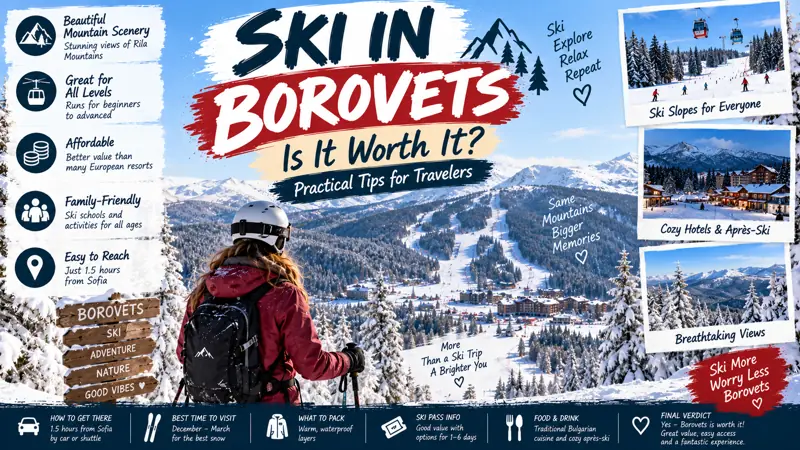
Ski in Borovets – Is It Worth It? Practical Tips for Travelers
Ski in Borovets—is it worth it? For many travelers, yes – especially if you want an accessible European ski break, a compact resort, beginner-friendly learning options, and generally lower trip costs than famous Alpine destinations. At Things to do Global, this travel guide explains what Borovets does well, where expectations should stay realistic, and how to plan a ski trip that fits your ability and budget.
Borovets sits in Bulgaria’s Rila Mountains, within practical reach of Sofia. It is one of the country’s best-known winter resorts and combines lift-served skiing with hotels, rentals, ski schools, restaurants, and evening entertainment in a relatively concentrated area. That convenience makes destination planning simpler for a short ski holiday.
Table of Contents
Where Is Borovets?
Borovets is south of Sofia in the Rila Mountains, near the town of Samokov. For international visitors, Sofia Airport is the usual gateway. Private transfers, shared shuttles, rental cars, and combinations of public transport can all work, but a pre-arranged transfer is often the easiest option when traveling with ski luggage.
The resort itself is compact enough that many visitors walk between hotels, restaurants, rental shops, and central lifts. If you stay farther out, check whether your accommodation includes a shuttle.
What Is Skiing in Borovets Like?
The ski area is spread across several sectors connected by lifts and ski routes. Terrain includes gentle beginner areas, intermediate pistes, and steeper sections for confident skiers and snowboarders. Conditions and lift operations change with snowfall, wind, maintenance, and the part of the season.
Before buying passes or planning a specific route, check the official Borovets ski map and lift information. The resort publishes live operational information, which is more useful than relying on an old blog post for daily conditions.
Is Borovets Good for Beginners?
Beginners are one of the groups most likely to enjoy Borovets. Ski schools, equipment rental, and relatively easy access to learning areas make it practical for a first ski holiday. English is widely used in tourism, although instructor availability can vary in busy weeks.
Book lessons in advance if you are traveling during holidays. Two or three mornings of instruction can improve the rest of your trip dramatically and is usually better value than struggling alone on terrain that feels intimidating.
Is Borovets Good for Intermediate Skiers?
Intermediate skiers can have a very enjoyable few days, particularly when most terrain is open. The resort is large enough to give variety for a short break without feeling overwhelming.
Travelers used to enormous linked Alpine domains may find the total area limited for a full week of aggressive mileage. For a three- or four-day trip, however, the scale can be an advantage because you spend less time navigating between distant sectors.
What About Advanced Skiers and Snowboarders?
There are steeper runs and more challenging conditions, but serious experts should manage expectations. Borovets is not designed to compete with Europe’s largest high-altitude ski networks for endless advanced terrain.
Off-piste travel adds avalanche and navigation risks. Hire a qualified local guide and carry appropriate safety equipment rather than following tracks simply because other people have skied them.
When Is the Best Time to Ski in Borovets?
The winter season usually runs from December into spring, but exact opening and closing dates depend on snow and operations. Mid-winter often gives the most reliable combination of natural and machine-made snow, while late-season skiing can bring longer days and softer afternoon conditions.
Avoid booking based only on historical averages. Check current snow reports and lift status close to departure, especially if traveling at the edges of the season.
Snow Conditions and Altitude: What to Expect
Borovets offers terrain at different elevations, which helps spread skiers across the mountain, but it is not immune to warm spells. Lower runs can be more affected by changing temperatures than higher sectors.
If snow quality is your top priority, stay flexible about which part of the mountain you ski each day. Local instructors and patrol information are useful for understanding where conditions are best.
Ski Passes, Rentals and Lessons
Prices change by season, age category, duration, and promotions, so current official rates are more reliable than fixed numbers in a static article. Budget for four main categories: lift passes, equipment rental, lessons if needed, and insurance that covers winter sports.
Reserve specialty equipment ahead if you need uncommon boot sizes or premium skis. Beginners can usually rent standard packages locally without transporting equipment by air.
Is Borovets Expensive?
Compared with many famous resorts in France, Switzerland, or Austria, Borovets is often attractive to travelers watching their ski budget. Accommodation, casual meals, lessons, and rentals can be more approachable, although peak weeks and slopeside hotels still command premium prices.
The key is to compare total trip cost rather than one lift-pass number. Flights, airport transfers, baggage fees, lessons, food, and insurance can change which destination is actually better value.
Where to Stay in Borovets
Staying near the central lifts is convenient for first-timers and families because you can reduce morning transport. Slopeside or near-lift hotels may cost more but save time every day.
Apartments can be good for groups who want kitchens and more living space. If you choose accommodation outside the central core, confirm shuttle times before booking; walking in ski boots is less charming than it sounds.
Food, Apres-Ski and Evenings
Borovets has casual restaurants, hotel dining, bars, and apres-ski venues. The scene is lively enough for groups who want evening entertainment but still manageable for travelers who prefer a quiet dinner.
Bulgarian dishes such as grilled meats, soups, salads, banitsa-style pastries, and warming mountain food can make evenings part of the travel experience rather than simply refueling between ski days.
Other Things to Do in Borovets
A ski trip does not need to be nonstop downhill laps. Depending on seasonal conditions, you may find snowshoeing, spa time, scenic lift rides, winter walks, sledding, or excursions toward Samokov.
This is useful for mixed-ability groups. Non-skiers should still check what is genuinely open during their travel dates instead of assuming every winter activity runs daily.
How to Get to Borovets from Sofia
A direct private or shared transfer from Sofia Airport is the simplest option for most visitors. It reduces connections and makes ski luggage easier to manage. Driving yourself can work if you are comfortable with winter roads and parking, but check rental-car rules about winter equipment.
Public transport is cheaper but may involve connections through Samokov and is less convenient with bulky luggage.
Who Will Love Borovets?
Borovets suits beginners, casual intermediates, families, groups, and travelers trying skiing without committing to a luxury Alpine budget. It also works well for short breaks because the resort is compact and transfer time from Sofia is manageable.
It can be a particularly good choice when your priority is learning, social skiing, and affordability rather than collecting hundreds of piste kilometers.
Who Might Prefer Another Resort?
Experts who want huge linked ski areas, extensive lift infrastructure, or very high-altitude snow reliability may prefer larger Alpine destinations. Travelers looking for a luxury village atmosphere with fine-dining depth may also find Borovets more functional than glamorous.
That is not a flaw; it simply means the resort works best when expectations match what it offers.
Is Skiing in Borovets Worth It for Families?
For many families, yes. A compact base, lessons, rental shops, and a range of accommodation can simplify logistics. Parents should still compare childcare, ski-school age limits, and room locations before booking.
A hotel that saves a long daily walk may be worth more than one that is slightly cheaper but farther from the lifts.
Practical Ski Safety Tips
Wear a helmet, follow piste signs, respect closed areas, and carry the phone number for local emergency services. Check weather and lift status every morning. Ski within your ability, especially when visibility is poor or slopes become icy late in the day.
Travel insurance should explicitly cover skiing or snowboarding. Standard policies sometimes exclude winter sports unless you add the appropriate cover.
Planning a Borovets Trip as Part of Bulgaria
If time allows, combine the ski holiday with Sofia before or after the mountains. This adds restaurants, museums, architecture, and city life to the trip without requiring another flight.
For more places to visit and trip ideas, explore our global travel destinations guides when building a wider Bulgaria or Europe itinerary.
FAQs About Skiing in Borovets
1. Is Borovets good for beginner skiers?
Yes. The resort has ski schools, rental shops, and learning terrain that make it a practical first ski destination.
2. How many days do you need in Borovets?
Three to five ski days works well for many visitors. Beginners may want extra time for lessons and rest, while experienced skiers may combine the resort with Sofia.
3. What month is best for Borovets?
Mid-winter is generally the safest bet for snow coverage, but conditions vary every season. Check current resort reports before travel.
4. Can you reach Borovets from Sofia Airport easily?
Yes. Private and shared transfers are commonly used. Public transport is cheaper but requires more planning.
5. Is Borovets cheaper than the Alps?
It is often less expensive overall, particularly for accommodation, lessons, and food, but total costs depend on dates, flights, and your travel style.
6. Do I need to bring my own skis?
No. Rental equipment is widely available. Bringing your own may make sense for experienced skiers with strong equipment preferences.
7. Is Borovets good for snowboarders?
Yes. Snowboarders use the same lift network and terrain, although exact park features and conditions can vary by season.
8. Is Borovets suitable for non-skiers?
It can be, particularly for spa time, winter scenery, restaurants, and seasonal activities, but non-skiers should check what is open during their dates.
9. Should I book ski lessons in advance?
Yes during weekends, holidays, and peak periods. Advance booking gives you a better chance of getting the lesson time and language you prefer.
10. So, ski in Borovets – is it worth it?
It is worth considering if you want a compact, approachable, good-value European ski break and you are comfortable with a smaller ski area than the major Alpine resorts.
Final Thoughts
So, ski in Borovets – is it worth it? For beginners, families, casual intermediates, and budget-aware travelers, the answer is often positive. Borovets delivers the essentials of a winter holiday without requiring the scale or price of a giant Alpine resort. Check current conditions, stay realistic about terrain, book lessons when needed, and use smart destination planning to make the most of your time in Bulgaria.
Tags :
example, category, and, terms