in

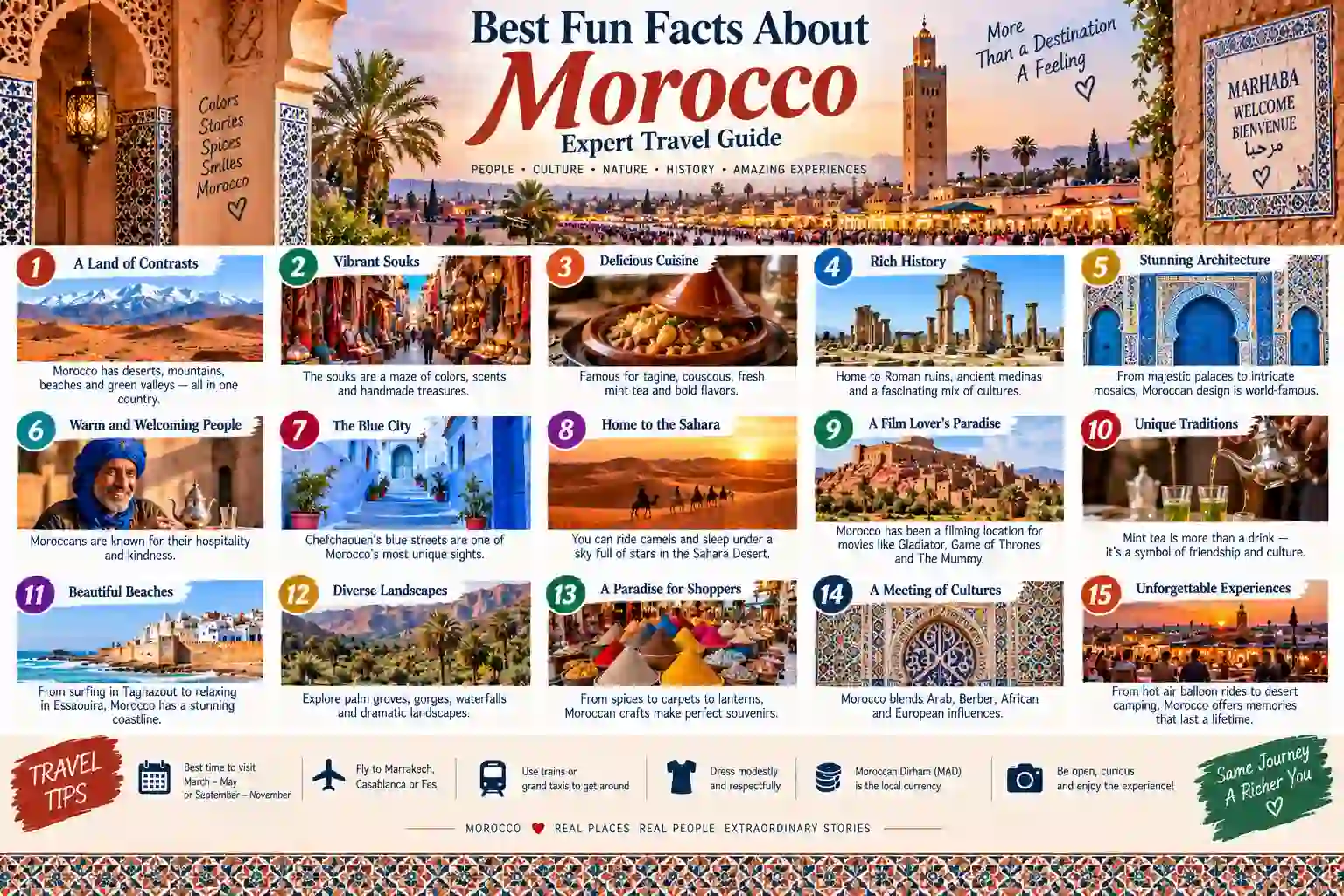
Best Fun Facts About Morocco | Expert Travel Guide
Table of Contents
20 Fun Facts About Morocco
20 fun facts about Morocco reveal a country shaped by Amazigh, Arab, African, Mediterranean and European influences, with historic medinas, mountain villages, Atlantic surf towns and Saharan landscapes all packed into one trip. At Things to do Global, we like Morocco because travelers can move from ornate palaces and lively souks to snow-dusted peaks and desert dunes without crossing a border.
These Morocco facts are more than trivia. Each one can help with destination planning, suggest memorable places to visit, and turn a standard itinerary into a richer travel guide. Use them as inspiration for your own trip ideas, then slow down enough to experience the food, architecture and daily rhythms behind the headlines.
1. Morocco Has Both Atlantic and Mediterranean Coastlines
Morocco faces the Atlantic Ocean to the west and the Mediterranean Sea to the north. That gives the country very different coastal moods, from the surf culture of Taghazout and Essaouira to northern beaches around Al Hoceima and the Rif. A coastal road trip is one of the easiest ways to see how varied Morocco can feel.
2. Arabic and Amazigh Are Official Languages
Modern Standard Arabic and Amazigh are Morocco’s official languages, while Moroccan Arabic, or Darija, is widely spoken in everyday life. French is also common in tourism, business and education. Learning a few greetings in Darija is a simple way to make local interactions warmer and more respectful.
3. Morocco Has Nine UNESCO World Heritage Properties
As of 2026, Morocco has nine properties on the UNESCO World Heritage List, including the medinas of Fez and Marrakesh, Volubilis, Ait-Ben-Haddou and historic Rabat. You can check the current list on UNESCO’s official Morocco page. For heritage-focused destination planning, these sites create an excellent backbone for a first trip.
4. The Medina Is Still a Living Part of Many Cities
A medina is not simply an old quarter preserved for visitors. In cities such as Fez, Marrakech, Tetouan and Essaouira, people still live, shop, work, worship and make crafts inside historic walled districts. Getting pleasantly lost is part of the experience, although a reputable local guide can add valuable context in the more complex lanes.
5. Marrakech Is Often Called the Red City
Marrakech is nicknamed the Red City because of the warm ochre and reddish tones of its walls and traditional buildings. The color becomes especially striking in late-afternoon light, when the medina, Koutoubia area and rooftop terraces glow against the Atlas Mountains.
6. Jemaa el-Fna Is Recognized for Intangible Heritage
Jemaa el-Fna is famous for food stalls, musicians, performers and storytelling traditions. UNESCO recognized its cultural space as intangible heritage, which helps explain why the square feels less like a monument and more like a constantly changing performance. Visit before sunset, then stay as the evening crowds build.
7. The Atlas Mountains Cut Across the Country
The High, Middle and Anti-Atlas ranges create dramatic mountain scenery and shape regional climates. Villages around Imlil are popular bases for trekking, while Toubkal is North Africa’s highest peak. Even travelers who do not hike can enjoy mountain roads, valleys and day trips from Marrakech.
8. Morocco Reaches the Sahara
In southeastern Morocco, travelers can reach Saharan landscapes around Merzouga and the Erg Chebbi dunes, as well as desert routes farther south. Multi-day journeys often combine kasbahs, oasis valleys and desert camps. Build enough time into the itinerary because the road distances from Marrakech or Fez are longer than they appear on a map.
9. Argan Traditions Are Internationally Recognized
Argan oil comes from the argan tree, which is strongly associated with southwestern Morocco. UNESCO has recognized the practices and knowledge connected with the argan tree as intangible cultural heritage. When shopping, look for reputable cooperatives and clear labeling rather than buying the first bottle offered in a tourist market.
10. Couscous Is More Than a Dish
Couscous is tied to family meals, hospitality and shared culinary knowledge across North Africa. UNESCO inscribed the knowledge and practices surrounding couscous in a joint nomination by Morocco, Algeria, Mauritania and Tunisia. Trying a regional version is an easy way to connect food with history and community.
11. Mint Tea Is a Social Ritual
Sweet green tea with fresh mint is served throughout Morocco in homes, riads, cafés and shops. The pouring itself can be part of the ritual, often from a height into small glasses. Accepting a glass can turn a quick transaction into a slower conversation, although travelers should never feel pressured to buy something afterward.
12. Riads Turn Traditional Houses Into Memorable Stays
A riad traditionally centers on an interior courtyard, often with a fountain, garden or tiled patio. Many have been converted into small hotels and guesthouses. Staying in one is a strong choice for travelers who want atmosphere and walkable access to a medina rather than the facilities of a large resort.
13. Morocco Has Roman Ruins at Volubilis
The archaeological site of Volubilis near Meknes preserves columns, mosaics and urban remains from the Roman period. It is one of the country’s most surprising cultural attractions because it adds a completely different historical layer to the imperial-city route. Pair it with Meknes or Moulay Idriss for a rewarding day trip.
14. Ait-Ben-Haddou Is a Famous Film Location
The fortified ksar of Ait-Ben-Haddou has appeared in numerous film and television productions, but it is worth visiting for its earthen architecture even if you are not a movie fan. The site sits on a historic caravan route and is one of Morocco’s best-known heritage landscapes.
15. Chefchaouen Is Known for Its Blue-Washed Streets
Chefchaouen in the Rif Mountains is famous for lanes painted in shades of blue. The photogenic old town attracts many day visitors, so staying overnight can give you quieter early-morning and evening hours. The surrounding mountains also make it a useful base for short walks and nature-focused trip ideas.
16. Morocco Can Have Snow and Skiing
Morocco is often imagined only as desert, yet the Atlas Mountains receive winter snow. Ski areas such as Oukaimeden operate when conditions allow, while Ifrane and the Middle Atlas can feel unexpectedly alpine. This contrast is one of the most entertaining Morocco facts for first-time visitors.
17. Souks Are Organized Around Crafts and Trade
Traditional markets sell leatherwork, metal lamps, ceramics, carpets, spices, textiles and everyday household goods. Bargaining is common in many tourist-facing shops, but it works best when kept friendly. Decide what an item is worth to you, compare quality, and be comfortable walking away.
18. Friday Has Special Importance
Friday is the main congregational prayer day in Islam, and rhythms can change around midday prayers. Some businesses may operate differently, especially outside heavily touristed areas. During Ramadan, meal times and opening hours can shift more noticeably, so check local conditions close to your trip.
19. Moroccan Food Changes by Region
Tagines, couscous and pastilla may be well known, but regional food is much broader. Coastal towns emphasize fish and seafood, Fez has a refined culinary tradition, the Atlas offers hearty mountain dishes, and the south uses dates, almonds and preserved ingredients in distinctive ways. Food tours are a practical commercial option for travelers who want context as well as tastings.
20. The Best Trips Mix Cities With Landscapes
One of the most useful 20 fun facts about Morocco is that the country rewards variety. A route combining Marrakech, the Atlas Mountains, Ait-Ben-Haddou and the desert feels completely different from a northern itinerary linking Tangier, Chefchaouen and Fez. Morocco is easiest to appreciate when you avoid trying to squeeze every famous stop into one rushed loop.
How to Use These Morocco Facts to Plan a Trip
For a first visit, choose two or three geographic areas and build around travel time rather than a long checklist. Browse our global travel destinations hub for more trip ideas and destination planning inspiration. In Morocco itself, a seven-to-ten-day trip can combine an imperial city with mountains or coast, while two weeks gives you room for a desert journey without spending every day in transit.
Spring and autumn are popular for city sightseeing and outdoor activities, but conditions vary sharply by altitude and region. Reserve highly rated riads, desert camps and guided hikes ahead during busy periods, and keep some flexibility for weather, road conditions and the slower pace that often makes Morocco most enjoyable.
FAQs
1. What is Morocco best known for?
Morocco is known for historic medinas, colorful souks, tagines and couscous, mint tea, the Atlas Mountains, Saharan dunes, Islamic and Amazigh heritage, riads and ornate architecture.
2. How many UNESCO World Heritage Sites does Morocco have?
As of 2026, Morocco has nine UNESCO World Heritage properties, all listed as cultural sites.
3. What languages are spoken in Morocco?
Arabic and Amazigh are official languages. Darija is widely used in daily life, and French is common in tourism, business and education.
4. Is Morocco only a desert destination?
No. Morocco also has Atlantic and Mediterranean coasts, fertile valleys, cedar forests, mountain ranges, historic cities and modern urban centers.
5. What food should first-time visitors try?
Try a regional tagine, couscous, pastilla, harira, grilled meats, fresh bread, local pastries and mint tea. Coastal seafood is also excellent in many towns.
6. Is bargaining normal in Morocco?
Bargaining is common in many souks and tourist-facing shops. Keep it friendly, compare quality, and agree on a price you genuinely feel comfortable paying.
7. How many days are enough for Morocco?
Seven to ten days works for a focused first trip. Two weeks is better if you want to combine major cities, mountains, coast and a multi-day desert route.
8. When is the best time to visit Morocco?
Spring and autumn are popular for sightseeing because temperatures are often moderate. Summer can be very hot inland, while winter brings cooler nights and snow at higher elevations.
9. Do I need a guide in Moroccan medinas?
Not always, but a licensed guide can be valuable in complex medinas such as Fez, especially if you want historical context and help finding workshops or monuments.
10. What should travelers wear in Morocco?
Comfortable, modest clothing is a practical choice, especially in religious or traditional settings. Lightweight layers work well because temperatures can change significantly between day and night.
Final Thoughts
These 20 fun facts about Morocco show why the country is so much more than a single postcard image. Its appeal comes from the contrast between medinas and modern cities, Atlantic beaches and desert dunes, mountain villages and royal architecture, and everyday rituals such as tea and shared meals.
Use the facts as a starting point rather than a checklist. Choose a route that leaves time for conversation, food, walking and unplanned discoveries, and Morocco’s history and culture become much easier to appreciate.
Tags :
example, category, and, terms