in

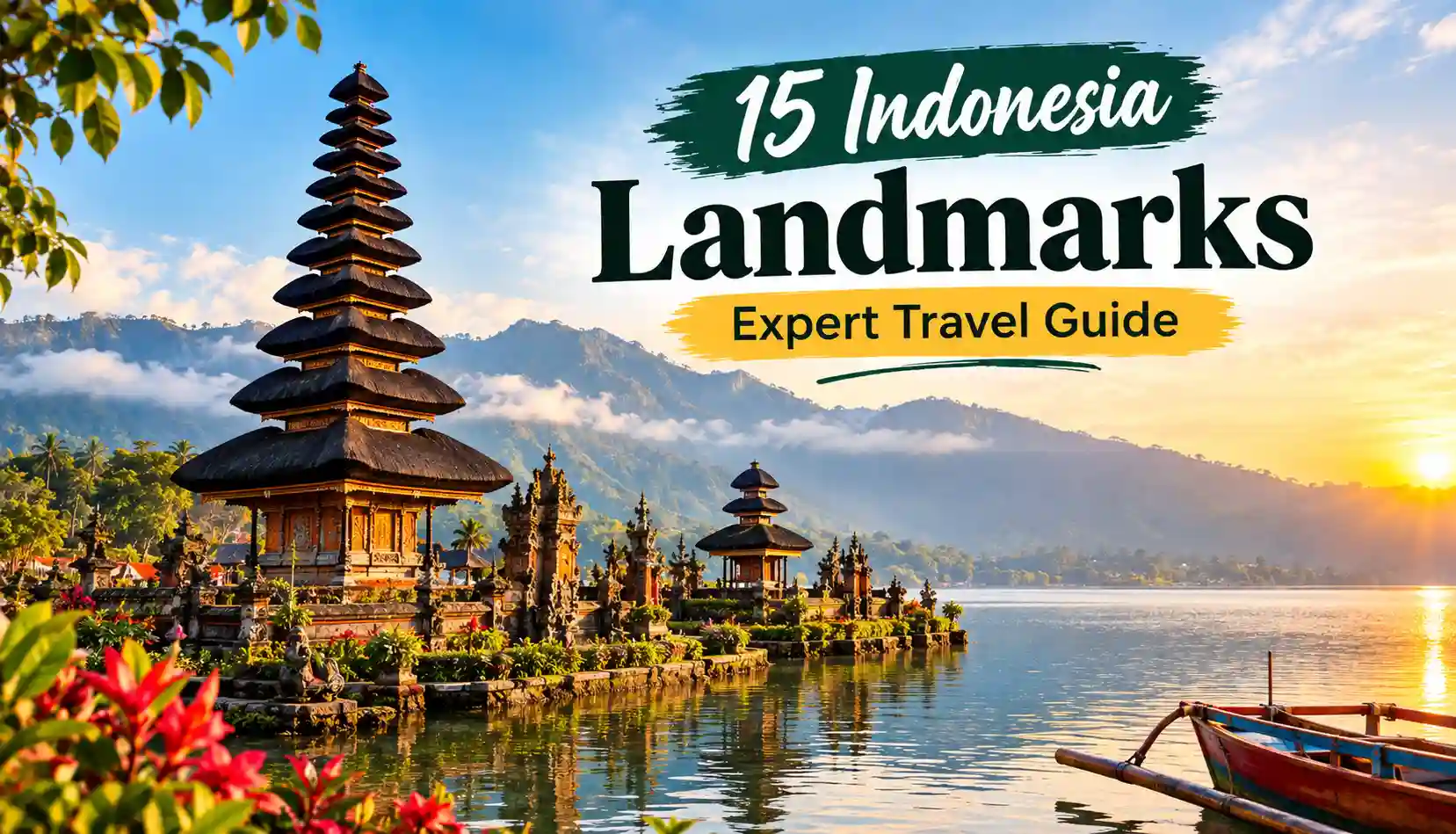
15 Indonesia Landmarks | Expert Travel Guide
{Things to do in Indonesia}. The country’s huge size means its landmarks are wonderfully varied: ancient temples, dramatic volcanoes, sacred water sites, colonial districts, rice terraces, and protected island ecosystems all compete for attention. This Things to do Global guide to 15 Indonesia landmarks helps you turn that variety into practical trip ideas, with suggestions for routes, cultural visits, and destination planning.
Table of Contents
Why Indonesia’s Landmarks Stretch Far Beyond Bali
Indonesia is an enormous archipelago, so its landmarks range from Buddhist and Hindu temples to volcanic landscapes, royal sites, rice terraces, colonial districts, and protected natural areas.
The official Indonesia tourism platform highlights destinations including Borobudur, Prambanan, Bali, Labuan Bajo and Komodo National Park. UNESCO lists multiple Indonesian World Heritage properties, including Borobudur Temple Compounds and Prambanan Temple Compounds.
This guide to 15 Indonesia landmarks is designed for trip inspiration rather than a strict ranking. The biggest challenge is choosing a realistic geographic route.
15 Indonesia Landmarks to Add to Your Travel List
- Borobudur Temple, Central Java — One of Indonesia’s defining Buddhist monuments. Official tourism information describes it as a major Buddhist monument built between the 8th and 9th centuries, with extensive reliefs and stupas.
- Prambanan Temple, Central Java — A monumental Hindu temple complex from the 9th century and a UNESCO-listed site. Official Indonesian tourism information identifies it as the country’s largest Hindu temple complex.
- Tanah Lot, Bali — A sea temple perched on an offshore rock formation and one of Bali’s most recognizable coastal scenes.
- Uluwatu Temple, Bali — A dramatic temple setting above the Indian Ocean, known for cliffs, sunsets and traditional performances.
- Mount Bromo, East Java — A volcanic landscape famous for sunrise viewpoints and the stark scenery of the Bromo Tengger Semeru area.
- Komodo National Park — A protected island and marine landscape associated with the Komodo dragon, Padar’s viewpoints and diverse coastal ecosystems.
- Padar Island — Known for its striking elevated viewpoint overlooking multiple bays and rugged island landscapes.
- Tana Toraja traditional houses and landscapes, Sulawesi — A culturally distinctive region where architecture, ceremonies and mountain scenery form a very different type of landmark experience.
- Tugu Jogja, Yogyakarta — A historic city monument and recognizable symbol of Yogyakarta.
- Sultan’s Palace, Yogyakarta — A living cultural and royal complex that provides context for Javanese traditions and the city’s history.
- Tirta Empul, Bali — A Hindu water temple complex associated with purification rituals and Balinese religious practice.
- Jatiluwih Rice Terraces, Bali — A large cultural landscape illustrating Bali’s traditional agricultural systems and mountain scenery.
- Lake Toba, North Sumatra — A huge volcanic lake surrounded by highland landscapes and Batak cultural heritage.
- Ratu Boko, Central Java — An archaeological site on elevated ground near Prambanan, valued for ruins and wide landscape views.
- Jakarta Old Town (Kota Tua) — A historic urban district with Dutch colonial-era buildings, museums and a different side of Indonesia’s capital.
How to Group Indonesia Landmarks Into Realistic Routes
For a culture-heavy Java route, combine Yogyakarta, Borobudur, Prambanan and nearby heritage sites. For a Bali route, combine Uluwatu, Tanah Lot, Tirta Empul and Jatiluwih while allowing time for beaches and local neighborhoods.
Komodo National Park requires a separate travel block because Labuan Bajo is the main gateway. Official information notes that access to the park is generally by boat from Labuan Bajo and that conditions, permits and conservation rules matter.
Do not treat Indonesia as if all attractions are close together. Flights, ferries, road transfers and weather can substantially affect a travel schedule.
Practical Tips for Landmark Travel in Indonesia
Start outdoor sightseeing early to avoid the strongest heat and to make better use of daylight. Bring sun protection, water, comfortable footwear and a light layer for higher elevations.
Temples and religious sites require respectful behavior. Follow signs about clothing, footwear, photography and restricted areas. Some sacred spaces have rules that differ from standard tourist attractions.
For wildlife areas such as Komodo National Park, follow ranger instructions and keep a safe distance from animals. Do not approach, feed, chase or provoke Komodo dragons.
Plan More Trips With Things to do Global
If you are building a wider trip around this destination, explore our culture and landmarks for more practical routes and destination ideas. For authoritative destination information, also check the Official Indonesia Tourism Website.
Frequently Asked Questions
What are the most famous Indonesia landmarks?
Major landmarks include Borobudur, Prambanan, Tanah Lot, Uluwatu, Mount Bromo and Komodo National Park, alongside many regional cultural sites.
How many Indonesia landmarks can I see in one trip?
That depends on the length of your vacation. A focused Java or Bali route is more realistic than trying to cover the entire archipelago.
Is Borobudur worth visiting?
Yes for travelers interested in Buddhist architecture, history and monumental art. It is one of Indonesia’s best-known heritage attractions.
What is the difference between Borobudur and Prambanan?
Borobudur is a major Buddhist monument, while Prambanan is a Hindu temple complex. Both are in Central Java and are UNESCO-listed heritage sites.
Can I visit Komodo National Park independently?
Access is regulated and many visitors use organized boat trips or local operators from Labuan Bajo. Check current park rules and reservations before traveling.
Which Indonesia landmarks are best for photographers?
Padar Island, Mount Bromo, Tanah Lot, Uluwatu, Borobudur and Jatiluwih offer very different visual settings.
Are temples in Indonesia open to everyone?
Access varies by site. Some areas are open to visitors while specific sacred spaces may be restricted.
What should I pack for an Indonesia landmark trip?
Pack breathable clothing, modest temple clothing, sun protection, comfortable shoes, rain protection and your normal travel essentials.
When is the best time to visit Indonesia’s landmarks?
Weather varies substantially by island. Check the local seasonal pattern for each region rather than relying on one national travel season.
Should I base my itinerary around Bali?
Bali is convenient for a first trip, but Java, Sumatra, Sulawesi and eastern Indonesia offer major landmarks and cultural experiences too.
Final Thoughts
Indonesia is best approached region by region. Build a Java itinerary around Yogyakarta and its major temples, use Bali for a mix of cultural and coastal landmarks, or dedicate a separate trip to eastern Indonesia and Komodo. The more realistic your route, the more time you will have to appreciate the cultural attractions rather than spending the vacation in transit.
Tags :
example, category, and, terms