in

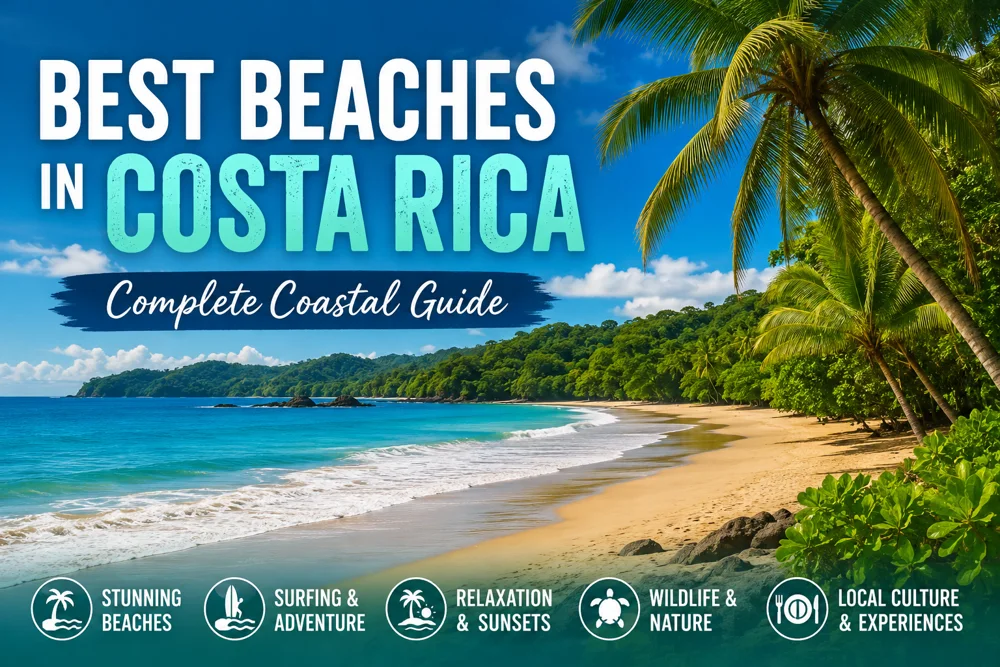
Best Beaches in Costa Rica | Complete Coastal Guide
August 25, 2026 2:55 PM
Best beaches in Costa Rica offer far more than soft sand and warm tropical water. With the Pacific Ocean on one side and the Caribbean Sea on the other, Costa Rica gives travelers an incredible mix of surf beaches, quiet coves, jungle-backed shores, volcanic black sand, wildlife encounters, snorkeling spots, and lively beach towns. At Things to do Global, we’ve put together this coastal guide to help you choose the right beaches for your trip, whether you want to surf, swim, relax, explore nature, or experience Costa Rica’s famous pura vida lifestyle.
From the Caribbean atmosphere around Puerto Viejo to the sunsets of Guanacaste and the wild landscapes of the southern Pacific coast, Costa Rica’s shoreline is remarkably diverse. Some beaches are ideal for families and swimming, while others attract experienced surfers or travelers searching for quieter local experiences.
If tropical coastlines are the highlight of your travels, explore our guide to beaches and islands for more destinations worth adding to your bucket list.
Table of Contents
Why Are Costa Rica’s Beaches So Special?
Costa Rica sits between two very different bodies of water, creating distinctive coastal environments. The Pacific side includes famous destinations such as Guanacaste, the Nicoya Peninsula, Manuel Antonio, Uvita, and the Osa Peninsula. The Caribbean side has a different character, combining tropical vegetation, colorful coastal communities, coral reefs, and Afro-Caribbean culture.
The country’s official tourism information highlights roughly 800 miles of coastline, with beaches suitable for activities ranging from swimming and snorkeling to sailing and surfing.
That diversity makes the coast one of Costa Rica’s top attractions. You could spend one day learning to surf and another walking through rainforest before reaching an almost untouched tropical beach.
1. Playa Manuel Antonio – Best for Beach and Wildlife
Playa Manuel Antonio is an excellent choice for travelers who want more than a traditional beach day. Located within Manuel Antonio National Park on Costa Rica’s central Pacific coast, the area combines tropical shoreline with rainforest and abundant wildlife.
The scenery alone makes this one of the best places to visit in Costa Rica. Lush vegetation rises behind the sand, while monkeys, sloths, iguanas, and tropical birds may be seen throughout the surrounding park.
What to Do at Manuel Antonio
Spend part of your day walking the national park trails before cooling off near the coast. Photography, wildlife watching, relaxing on the sand, and exploring nearby viewpoints can easily fill an entire day.
Because Manuel Antonio is extremely popular, planning ahead is particularly important during busy travel periods.
Best for: Wildlife, couples, first-time visitors and nature lovers.
2. Playa Conchal – Best for Clear Water
Located in Guanacaste, Playa Conchal is famous for its unusual shoreline, where crushed shells contribute to its distinctive appearance.
The clear blue-green water and beautiful coastal scenery make Playa Conchal an excellent place to spend a relaxing day. Depending on sea conditions, visitors may enjoy swimming and snorkeling in addition to simply relaxing beside the water.
The surrounding Guanacaste region also offers resorts, restaurants and numerous other beaches, making Conchal easy to incorporate into a longer coastal vacation.
Best for: Swimming, relaxation, couples and photography.
3. Playa Tamarindo – Best for Surfing and Nightlife
Travelers looking for beaches plus restaurants, activities and nightlife should consider Playa Tamarindo.
Tamarindo is one of Costa Rica’s better-known Pacific beach destinations. Surf schools make it especially appealing to beginners who want to take their first lesson without traveling somewhere extremely remote.
Once the sun goes down, Tamarindo remains lively. Restaurants, bars and accommodation options make it convenient for travelers who prefer having plenty of services close by.
The beach can become busy during peak season, so travelers looking for complete solitude may prefer another destination.
Best for: Beginner surfers, nightlife, younger travelers and social trips.
4. Playa Santa Teresa – Best for Surf Culture
Santa Teresa has grown from a relatively quiet coastal community into one of Costa Rica’s best-known surf destinations.
Its long Pacific coastline, consistent surf culture and spectacular sunsets attract surfers, backpackers, digital nomads and wellness travelers from around the world.
Even if surfing isn’t part of your plans, Santa Teresa is worth considering. Yoga studios, cafés, restaurants and relaxed beachside accommodations make it possible to spend several days enjoying the area without creating a packed itinerary.
Watching the sunset from the beach is one of the simplest yet most memorable local experiences here.
Best for: Surfing, sunsets, backpackers, wellness and longer stays.
5. Playa Sámara – Best for Families
For travelers searching for a more relaxed Pacific destination, Playa Sámara is an appealing option.
Its bay setting can provide gentler conditions than some of Costa Rica’s more powerful surf beaches, although ocean conditions should always be checked before swimming.
Sámara has enough restaurants, accommodations and activities to make a multi-day stay comfortable without feeling as intense as some of the country’s busiest resort areas.
Beginner surf lessons are also available, making the area useful for families or travelers trying surfing for the first time.
Best for: Families, beginner surfers and relaxed beach holidays.
6. Playa Uvita – Best for Unique Coastal Scenery
Few of the best beaches in Costa Rica have a landscape as recognizable as Playa Uvita.
Located within Marino Ballena National Park, the coastline is known for the Whale Tail, a natural sand formation visible particularly well from above. At suitable tides, visitors can walk along this remarkable coastal formation.
The surrounding area is also associated with humpback whale watching during seasonal migrations.
Uvita is therefore much more than somewhere to sunbathe. It can form part of a broader nature itinerary combining beaches, waterfalls, wildlife and marine excursions.
Best for: Nature, photography, whale watching and adventure travelers.
7. Playa Cocles – Caribbean Beauty Near Puerto Viejo
Switching coasts completely changes the atmosphere.
Playa Cocles, near Puerto Viejo de Talamanca, combines tropical vegetation with a wide Caribbean shoreline and an established surfing scene.
The area around Puerto Viejo also provides access to restaurants, bicycle rentals and other Caribbean beaches, making it easy to explore several coastal spots rather than staying in one location.
Cocles can experience moderate to strong waves, so travelers should pay attention to local conditions before entering the water.
Best for: Caribbean scenery, surfing and active travelers.
8. Punta Uva – Best Caribbean Beach for Relaxation
If your image of Costa Rica involves turquoise water surrounded by tropical greenery, Punta Uva deserves a place near the top of your itinerary.
Located south of Puerto Viejo, Punta Uva combines a beautiful shoreline with thick coastal vegetation and nearby coral environments.
Kayaking, relaxing, walking and snorkeling when conditions permit are popular ways to experience the area.
Its combination of jungle and Caribbean water gives Punta Uva a distinctly tropical character and makes it one of the strongest additions to any Costa Rica sightseeing guide.
Best for: Couples, relaxation, snorkeling and Caribbean scenery.
9. Playa Chiquita – Best for a Quieter Caribbean Experience
Between Cocles and Punta Uva lies Playa Chiquita, a smaller destination that appeals to travelers wanting a quieter coastal atmosphere.
Dense tropical vegetation surrounding the beach adds to its secluded feeling. Rather than large resorts and busy entertainment areas, the experience here is more about slowing down and enjoying the natural surroundings.
Playa Chiquita also fits nicely into a bicycle or driving itinerary along the coast south of Puerto Viejo.
Best for: Quiet trips, couples and slow travel.
10. Playa Negra – Best Black-Sand Beach Experience
Costa Rica isn’t limited to postcard-style white and golden beaches. Its volcanic geography has also created striking dark-sand coastlines.
Several Costa Rican beaches carry the Playa Negra name, but the black-sand shoreline around Puerto Viejo provides a particularly interesting contrast to nearby Caribbean beaches.
Dark sand, tropical vegetation and blue water create dramatic scenery and excellent photography opportunities.
If you are building a complete sightseeing guide rather than simply searching for swimming beaches, visiting at least one black-sand beach adds another dimension to the trip.
Best for: Photography, unusual landscapes and relaxed walks.
11. Montezuma Beach – Best for Bohemian Atmosphere
Montezuma is a laid-back destination on the Nicoya Peninsula with a distinctly alternative character.
The coastline around town includes multiple beaches, while the wider area offers jungle walks and waterfalls. Wildlife sightings are also possible, giving visitors plenty to explore beyond the sand.
Ocean conditions vary and some stretches can be rocky or rough, so don’t assume every section is suitable for swimming.
Montezuma works especially well for independent travelers interested in nature, small-town atmosphere and slower travel.
Best for: Backpackers, nature lovers and adventurous couples.
12. Playa Hermosa – Best for Experienced Surfers
The name Playa Hermosa is used by multiple beaches in Costa Rica, so travelers need to check exactly which one they’re visiting.
The Playa Hermosa near Jacó on the Pacific coast is particularly famous for powerful surf.
Experienced surfers come for its waves, while non-surfers can enjoy watching the action and taking in the Pacific scenery.
This is not the beach to choose simply because you want calm swimming conditions. Always check local warnings, currents and surf conditions before entering the water.
Best for: Experienced surfers and surf photography.
Pacific Coast vs Caribbean Coast: Which Should You Choose?
Choosing between Costa Rica’s two coasts depends largely on the type of trip you want.
Choose the Pacific Coast If You Want:
Surf towns, dramatic sunsets, established resorts, numerous coastal road-trip options and a broad selection of beaches.
Destinations such as Tamarindo, Santa Teresa, Sámara, Manuel Antonio and Uvita provide very different experiences while remaining distinctly Pacific.
Choose the Caribbean Coast If You Want:
Tropical vegetation, Afro-Caribbean culture, colorful coastal communities, coral environments and a more laid-back atmosphere.
Puerto Viejo makes a useful base for visiting Cocles, Chiquita, Punta Uva and other nearby beaches.
Travelers with enough time can experience both coasts, which is arguably the best way to understand how diverse Costa Rica really is.
Best Time to Visit Costa Rica’s Beaches
There isn’t one perfect month for every beach because weather patterns differ between regions.
On much of the Pacific coast, the dry season generally runs from around mid-December through late April, making these months popular for sunny beach vacations. The green season extends roughly from May through mid-December and can bring heavier rainfall but also greener scenery, fewer visitors in some destinations and potential accommodation savings.
The Caribbean coast follows different rainfall patterns, so don’t automatically assume Pacific weather conditions apply there.
Before finalizing your dates, check the official Costa Rica tourism beach and travel information for current destination-planning guidance.
How Many Days Do You Need for a Costa Rica Beach Trip?
For a short vacation, five to seven days can work well if you concentrate on one region.
With 7–10 days, you could combine two destinations, such as Guanacaste and Manuel Antonio.
Travelers with around two weeks have much greater flexibility and may combine Pacific destinations with Puerto Viejo and the Caribbean coast.
Avoid trying to visit every famous beach. Road distances can look short on a map, but travel can take longer than expected. Spending two or three nights in each major destination usually creates a more enjoyable itinerary.
Essential Costa Rica Beach Safety Tips
Costa Rica’s beaches are beautiful, but ocean conditions should always be taken seriously.
Rip currents and strong waves can occur, and swimming conditions vary dramatically between beaches and even from day to day.
Always check warning flags and local conditions before entering the ocean. Avoid swimming alone whenever possible, and don’t assume a beach is safe simply because other visitors are in the water.
Bring reef-conscious sun protection, plenty of drinking water, insect repellent where appropriate and footwear suitable for hot sand or rocky areas.
Never leave valuables unattended while swimming.
What to Pack for Costa Rica’s Beaches
A lightweight beach setup will make exploring much easier. Useful items include high-SPF sunscreen, a reusable water bottle, quick-drying towel, hat, sunglasses, insect repellent, waterproof phone pouch and comfortable sandals.
A light rain jacket is useful during the green season.
If you’re planning snorkeling or surfing activities, renting equipment locally is often easier than carrying bulky gear between destinations.
Final Thoughts: Which Costa Rica Beach Is Best?
There isn’t a single winner among the best beaches in Costa Rica, because the country’s coastal variety is exactly what makes it special.
Choose Tamarindo or Santa Teresa if surfing and social atmosphere are priorities. Consider Sámara or Playa Conchal for a more relaxed Pacific experience. Head toward Manuel Antonio or Uvita when wildlife and nature matter as much as beach time. For Caribbean landscapes and culture, explore Cocles, Punta Uva and Playa Chiquita.
The best approach is to match your beach choices to your travel style instead of simply visiting the most famous names.
Whether you’re planning a surf holiday, romantic escape, family adventure or nature-focused road trip, Costa Rica offers enough coastline to build an entire vacation around the sea.
FAQs About the Best Beaches in Costa Rica
1. What is the most beautiful beach in Costa Rica?
Beauty is subjective, but Playa Conchal, Punta Uva, Manuel Antonio and Playa Uvita are among the strongest choices for spectacular scenery. Each offers a different landscape, from tropical jungle to clear water and unusual coastal formations.
2. Which side of Costa Rica has the best beaches?
Both sides are worth visiting. The Pacific coast offers a larger selection of famous surf and resort destinations, while the Caribbean coast provides tropical scenery, coral environments and a distinctive cultural atmosphere.
3. What is the best beach in Costa Rica for swimming?
Playa Sámara and some sheltered areas around Punta Uva can offer appealing swimming conditions when the sea is calm. Conditions change, however, so always check locally before entering the water.
4. What are the best beaches in Costa Rica for surfing?
Santa Teresa, Tamarindo, Cocles and Playa Hermosa are well-known surfing destinations. Tamarindo is particularly popular with beginners, while some breaks at Playa Hermosa are more appropriate for experienced surfers.
5. Which Costa Rica beach is best for families?
Playa Sámara is a popular option because of its relaxed town atmosphere, services and access to beginner-friendly activities. Families should still check daily ocean conditions before swimming.
6. Are Costa Rica beaches free to visit?
Costa Rica’s beaches are generally public. However, beaches located within national parks or protected areas may require park admission or have controlled access and opening hours.
7. When is the best time for a Costa Rica beach vacation?
For much of the Pacific coast, mid-December through April is the popular dry-season period. The green season can offer fewer crowds and lush landscapes. Caribbean weather patterns differ, so check conditions for your exact destination.
8. Where can I find white-sand beaches in Costa Rica?
Playa Conchal and several Caribbean destinations offer lighter-colored shorelines. Costa Rica also has golden, gray and striking black-sand beaches, so coastline appearance varies considerably by region.
9. How many beaches should I visit during a one-week trip?
Two main beach areas are usually enough for a seven-day vacation. Staying longer in fewer locations reduces travel time and allows you to enjoy the destination rather than constantly packing and moving.
10. Is the Caribbean or Pacific coast better for first-time visitors?
The Pacific coast may be easier for travelers wanting a classic combination of popular beach towns, surfing, resorts and nature attractions. The Caribbean is an excellent alternative for travelers prioritizing tropical vegetation, cultural experiences and a laid-back coastal atmosphere.
Tags :
example, category, and, terms