in

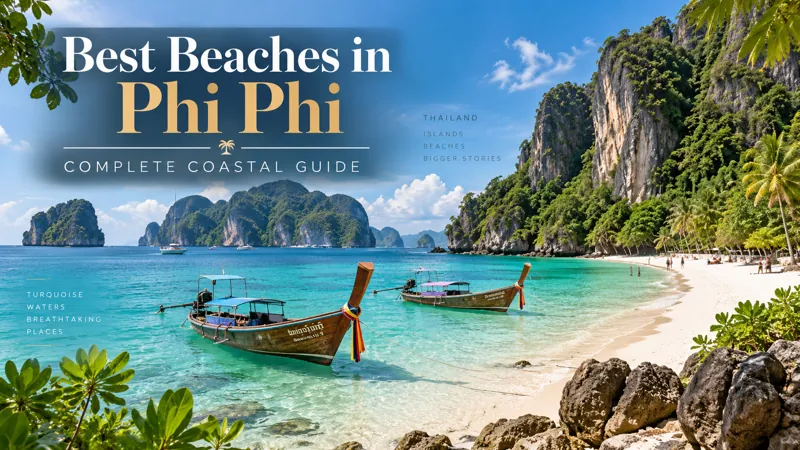
Best Beaches in Phi Phi | Complete Coastal Guide
Best beaches in Phi Phi include lively bays near Tonsai, quiet northern shores, snorkeling spots and world-famous protected scenery reached by boat. In this guide, Things to do Global compares access, atmosphere, swimming conditions and accommodation so you can choose a beach that matches your trip instead of following one generic ranking.
Phi Phi Don is the inhabited island; Phi Phi Leh and smaller islands are visited under marine-park rules. Tides, weather and conservation closures affect every visit, so confirm conditions locally.
Table of Contents
1. Long Beach: Best All-Round Choice
Long Beach combines soft sand, views toward Phi Phi Leh and access to snorkeling near Shark Point. It feels calmer than central Tonsai while retaining restaurants and accommodation.
Reach it by long-tail boat or a walking trail that can be rough, especially with luggage. Agree on return transport and avoid snorkeling alone in poor visibility.
2. Loh Dalum Bay: Best for Convenience
Loh Dalum sits close to Tonsai Village and offers shallow water, activities and nightlife. Low tide can pull the sea far back, while evenings become loud near party venues.
It suits social travelers and short stays. Families and light sleepers should choose the quieter end or a different bay.
3. Tonsai Beach: Best for Transfers
Tonsai is the arrival hub, busy with ferries and long-tail boats. Areas away from the pier provide sand and easy access to restaurants, but boat traffic reduces its appeal for relaxed swimming.
Use it for convenience, not isolation. Keep clear of working boat zones.
4. Viking Beach and Nearby Coves
The walking route from Tonsai toward Long Beach passes small coves, including Viking Beach. These compact swimming spots can feel peaceful early, but sand space and water depth depend on tide.
Follow established paths, respect resort access and carry supplies because facilities are limited.
5. Loh Ba Kao Bay
Loh Ba Kao on Phi Phi Don’s northeast side has a resort-oriented, quiet atmosphere and a broad tidal bay. Reaching it usually involves a boat or a demanding inland route.
It suits travelers willing to stay locally rather than commute to Tonsai nightlife. Confirm low-tide transfers before booking.
6. Laem Tong Beach
Laem Tong is a long northern beach with upscale resorts and a secluded feel. Its distance from Tonsai creates peace but also makes boat transport a central cost.
Couples and families seeking a resort break may prefer it; budget nightlife travelers may feel isolated.
7. Phak Nam Bay
Also called Relax Beach, Phak Nam offers a rustic setting and fewer day visitors. Access is commonly by boat or trail, and services are tied to nearby accommodation.
Choose it for nature and quiet, while accepting simpler logistics and limited evening options.
8. Maya Bay
Maya Bay on Phi Phi Leh is one of the world’s most famous coastal attractions. Conservation management controls entry and may prohibit swimming. Visitors must follow ranger instructions and current seasonal closures.
Treat it as a protected ecosystem, not a normal resort beach. The official Ko Phi Phi destination guide explains its national-park setting.
9. Bamboo Island
Bamboo Island combines pale sand and clear water on many boat itineraries. It can become busy at midday, and national-park fees may apply.
An early or carefully timed licensed tour improves the experience. Shade is limited, so bring strong sun protection.
10. Monkey Beach
Monkey Beach is visited primarily for macaques, not because it offers the most dependable swimming. Animals may bite or grab belongings.
Never feed, touch or crowd them. If monkeys approach, move away calmly and follow the guide.
Choosing the Right Phi Phi Beach
Choose Long Beach for balance, Loh Dalum for social convenience, Laem Tong or Loh Ba Kao for resorts, and Phak Nam for a rustic escape. Maya Bay and Bamboo Island work as regulated boat excursions rather than overnight bases.
Tide is as important as location. Ask the hotel how the beach looks at low tide, whether swimming remains possible and how bags reach the property.
Beach Safety and Responsible Travel
Sea conditions can change quickly, even when the beach looks calm. Follow flags and local warnings, stay within your swimming ability and never enter rough water after drinking. Use licensed boat operators, wear the supplied life jacket and keep a safe distance from propellers.
Protect marine life by refusing fish feeding, never standing on coral and taking all rubbish away. Sunscreen, reusable water and a dry bag belong in every island guide. Monkeys are wild animals: hide food, keep distance and never touch or pose beside them.
What to Pack
- Reef-conscious sun protection and a hat
- Reusable water bottle
- Waterproof pouch or dry bag
- Secure sandals or water shoes
- Light rain layer
- Insect repellent
- Small cash amount
- Copies of travel documents
Booking Tours and Accommodation
Compare hotels by beach access, noise, transfers and tide conditions rather than photos alone. For tours, check group size, park fees, safety equipment, cancellation terms and environmental practices. A cheap trip is poor value if it ignores weather warnings or rushes every stop.
Best Time to Visit
The drier season often offers calmer Andaman conditions but brings higher prices and crowds. Monsoon periods can produce rough seas and cancellations. No month guarantees safe water.
Stay at least three nights if beach time is important, giving the schedule room for one weather change. Explore more beaches and islands for additional best beaches and coastal planning.
Tides, Access and Daily Planning
Phi Phi’s beaches can change dramatically between high and low tide. A bay that looks ideal for swimming at noon may become shallow mud or exposed rock by sunset. Ask accommodation staff for the day’s tide pattern and plan swimming around local advice. Boat access can also become difficult when water is low, particularly at remote resorts.
Create a simple daily plan with one primary beach and one nearby alternative. Moving from the north of Phi Phi Don to Tonsai repeatedly costs time and money. Travelers staying at Laem Tong or Loh Ba Kao should enjoy that area rather than commute daily for central activities.
Snorkeling, Kayaking and Water Activities
Long Beach, selected bays and boat-tour stops may offer snorkeling when visibility and currents are suitable. Use equipment that fits properly, stay inside the guide’s designated zone and never chase marine animals. Beginners should practice close to shore before joining a longer session.
Kayaks provide access to small coves, but wind and boat traffic can make the return difficult. Wear a life jacket, carry water, tell someone the route and remain within the rental operator’s limits. Jet skis and powered activities require clear insurance, safety instruction and an established operator.
Families, Couples and Solo Travelers
Families should prioritize shade, shallow entry, toilets and child-sized life jackets rather than beauty alone. Couples seeking quiet may prefer a northern resort, while solo travelers often value central Tonsai access and organized excursions. Nightlife guests should choose Loh Dalum knowingly; those needing sleep should remain far from its loudest section.
Every traveler should share boat details privately with a trusted contact and keep passport copies separate from originals. Remote does not automatically mean dangerous, but it requires better return planning.
Food, Water and Island Costs
Supplies arrive by boat, so meals and drinks can cost more than on mainland Thailand. Central Tonsai has the widest range, whereas remote beaches depend on resort restaurants. Check whether breakfast and drinking-water refills are included before selecting a secluded hotel.
Carry enough water for walks but avoid creating unnecessary plastic waste. Eat at busy establishments with clear hygiene, explain allergies carefully and do not leave food where monkeys or other animals can reach it.
Accessibility and Comfort
Boats, floating piers, sand and steep paths make Phi Phi difficult for travelers with reduced mobility. Ask hotels for exact step counts, transfer methods and bathroom access. “Near the beach” does not guarantee a flat route. A suitable resort with staff-assisted transfer can be more valuable than a cheaper room reached by stairs.
Frequently Asked Questions
1. Which is the best beach in Phi Phi?
Long Beach is the strongest all-round choice for sand, views and relative calm.
2. Where should families stay?
Long Beach, Laem Tong and quieter resort bays can work well when child safety equipment and transfers are confirmed.
3. Can you swim at Maya Bay?
Swimming rules may restrict or prohibit entry. Follow current ranger instructions.
4. Which beach is best for nightlife?
Loh Dalum is closest to the main party area.
5. Are beaches private?
Thai beaches are generally public, but resort pathways and facilities may have conditions.
6. Do I need cash?
Cash is useful for boats, small shops and fees, though many hotels accept cards.
7. Can I walk to Long Beach?
Yes via a trail, but conditions, heat and luggage can make a boat easier.
8. Is Monkey Beach safe?
Keep distance from macaques, hide food and follow guides; bites require medical attention.
9. How many days do I need?
Three or four nights allow a boat day and flexible beach time.
10. When is the best weather?
Drier months are popular, but check short-range marine conditions for every boat day.
Tags :
example, category, and, terms