in

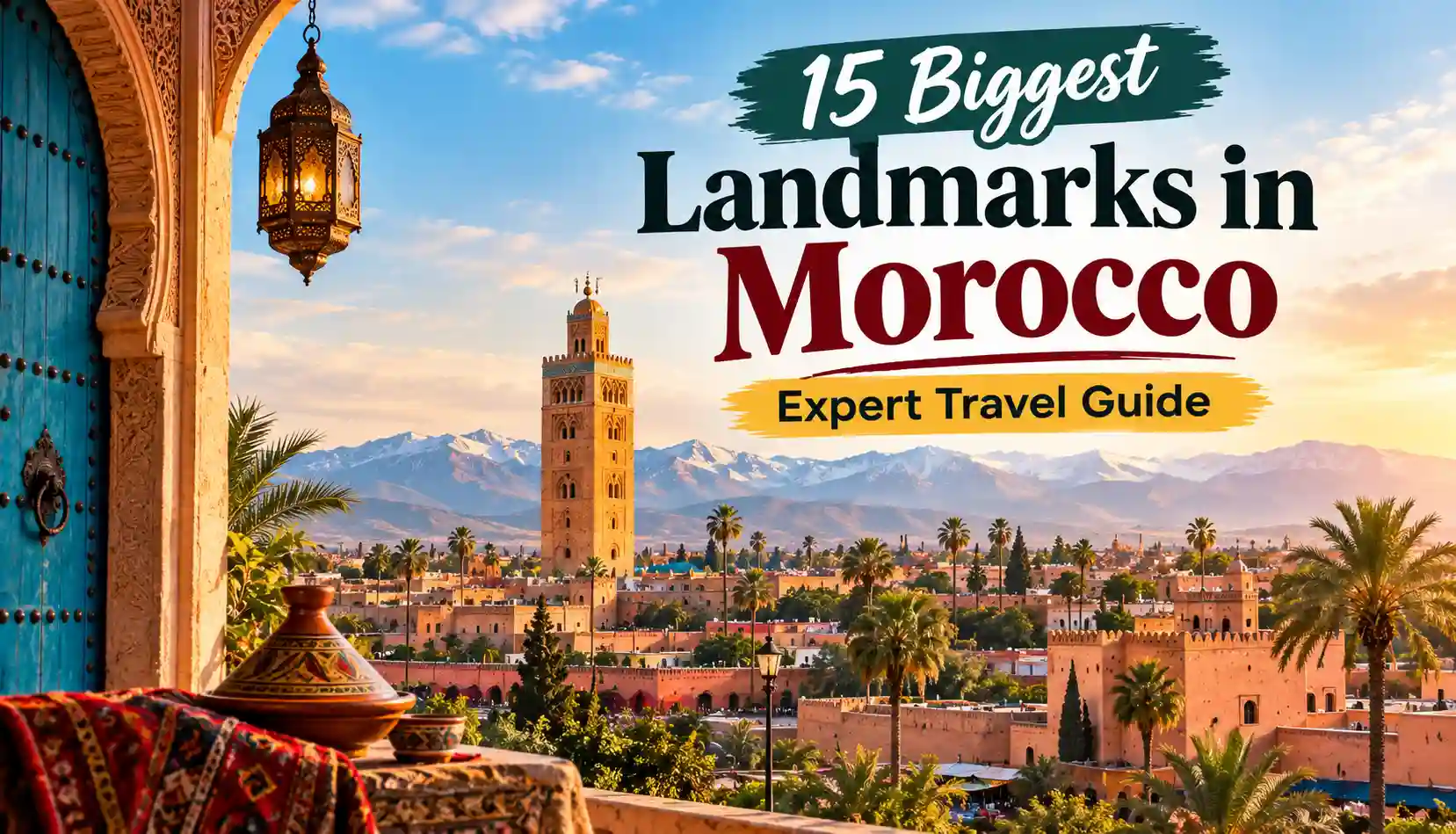
15 Biggest Landmarks in Morocco | Expert Travel Guide
{Things to do in Morocco}. Morocco’s greatest landmarks are not limited to one type of attraction. You can move from Atlantic architecture and imperial medinas to Roman ruins, desert kasbahs, monumental gates, and richly decorated palaces. This Things to do Global heritage guide covers the 15 biggest landmarks in Morocco, with practical ideas for combining historic sites, cultural attractions, and famous architecture in one trip.
Table of Contents
Why Morocco’s Landmarks Are So Diverse
Morocco’s landmark landscape ranges from imperial medinas and monumental gates to mosques, kasbahs, Roman ruins, desert architecture, and Atlantic-facing cities. The result is a destination where architecture is closely connected with craft, history, geography, and everyday life.
The Moroccan National Tourist Office highlights the country’s historic sites, medinas, ksars, kasbahs and monumental architecture as central parts of its heritage.
This list of the 15 biggest landmarks in Morocco focuses on places with strong architectural, cultural, historical, or visual significance. It is not a strict ranking by physical size.
15 Biggest Landmarks in Morocco
- Hassan II Mosque, Casablanca — One of Morocco’s most striking modern religious landmarks, dramatically positioned beside the Atlantic. The Moroccan tourism office describes it as the largest mosque in Africa and highlights its elaborate craftsmanship.
- Aït Ben Haddou — A fortified earthen settlement near Ouarzazate and one of Morocco’s best-known examples of southern architecture. Its clustered buildings and walls create an unforgettable landscape.
- Jemaa el-Fna, Marrakech — Marrakech’s famous square is a living cultural space surrounded by the medina, food stalls, performers, and historic streets.
- Koutoubia Mosque, Marrakech — Its minaret is one of the defining visual markers of Marrakech and a useful orientation point when exploring the medina.
- Bab Boujloud, Fez — The celebrated gateway provides a dramatic entrance into Fez’s historic medina and is a natural starting point for exploring Fez-El-Bali.
- Fez Medina — A maze of historic streets, workshops, religious buildings, markets, and traditional architecture. It is one of Morocco’s essential historic sites.
- Hassan Tower, Rabat — The unfinished minaret and surrounding complex form one of Rabat’s most recognizable monuments.
- Mausoleum of Mohammed V, Rabat — A richly decorated royal mausoleum near Hassan Tower, noted for its marble, tiled roof, woodwork and decorative details.
- Kasbah of the Udayas, Rabat — A fortified quarter overlooking the Atlantic and Bou Regreg, combining defensive architecture with white-and-blue streets.
- Volubilis — Extensive Roman ruins near Meknes, with columns, mosaics, arches and remnants of an ancient city set against a rural landscape.
- Bab Mansour, Meknes — A monumental gate associated with the imperial city of Meknes and its historic walls.
- Badi Palace, Marrakech — A dramatic ruined palace complex that helps reveal the scale and ambition of historic Saadian Marrakech.
- Bahia Palace, Marrakech — A maze of courtyards, painted ceilings, tiled surfaces and gardens that illustrates Moroccan decorative craftsmanship.
- Taourirt Kasbah, Ouarzazate — A large fortified kasbah and a useful stop when traveling through southern Morocco.
- Essaouira Medina and Ramparts — A coastal historic center with fortified walls, harbor views, markets, and a distinct Atlantic atmosphere.
How to Build a Morocco Landmark Route
A practical route can connect Marrakech, Aït Ben Haddou, Ouarzazate, and the desert before continuing toward Fez. Another option is a northern route through Rabat, Meknes, Fez and Chefchaouen.
If architecture is your priority, spend more time in Marrakech and Fez. If landscapes matter just as much, include the High Atlas and southern kasbah route. For a shorter vacation, avoid trying to cross the entire country.
Practical Tips for Visiting Moroccan Landmarks
Carry water and comfortable footwear. Medinas involve uneven surfaces, stairs and long periods of walking, while desert and southern routes can involve strong heat.
At mosques and religious spaces, follow access rules and dress respectfully. Some religious buildings are not open to non-Muslim visitors, so verify access before planning your day.
Consider hiring a licensed local guide in larger medinas if you want historical context or help navigating complex streets. Independent wandering can also be rewarding when you have plenty of time.
Plan More Trips With Things to do Global
If you are building a wider trip around this destination, explore our culture and landmarks for more practical routes and destination ideas. For authoritative destination information, also check the Moroccan National Tourist Office.
Frequently Asked Questions
What are the biggest landmarks in Morocco?
Major landmarks include Hassan II Mosque, Aït Ben Haddou, Jemaa el-Fna, Koutoubia Mosque, Fez Medina, Hassan Tower, Volubilis and historic kasbahs.
Is Aït Ben Haddou worth visiting?
Yes for travelers interested in earthen architecture, history and dramatic landscapes. It is especially convenient on a southern Morocco route.
What is Morocco famous for architecturally?
Morocco is known for medinas, riads, zellige tilework, carved wood, monumental gates, kasbahs, minarets and fortified settlements.
Can I see Morocco’s landmarks in one week?
You can see a selection, but not all 15 comfortably. A focused route around Marrakech and nearby southern sites is more realistic.
Which city is best for historic sites in Morocco?
Fez and Marrakech are especially rich in historic architecture, while Rabat offers major monuments in a more compact setting.
Do I need a guide in Moroccan medinas?
No, but a good local guide can make complex medinas easier to understand and navigate.
Are Moroccan landmarks suitable for families?
Many are, although heat, walking distances and uneven streets should be considered when traveling with children.
What should I wear when visiting landmarks in Morocco?
Comfortable, modest clothing is appropriate, especially around religious and traditional sites.
When is the best time to visit Morocco’s landmarks?
Spring and autumn are popular for comfortable sightseeing conditions. Summer can be very hot in inland and southern areas.
Should I book Morocco attractions ahead?
For popular tours, guides, desert trips and some major attractions, advance planning can be useful. Always check current official information.
Final Thoughts
Morocco rewards travelers who combine landmarks with the neighborhoods and landscapes around them. Choose a manageable route, leave room for markets and meals, and treat each medina or kasbah as an experience rather than a quick photo stop. With the right destination planning, these landmarks can become the framework for a much richer Moroccan journey.
Tags :
example, category, and, terms