in

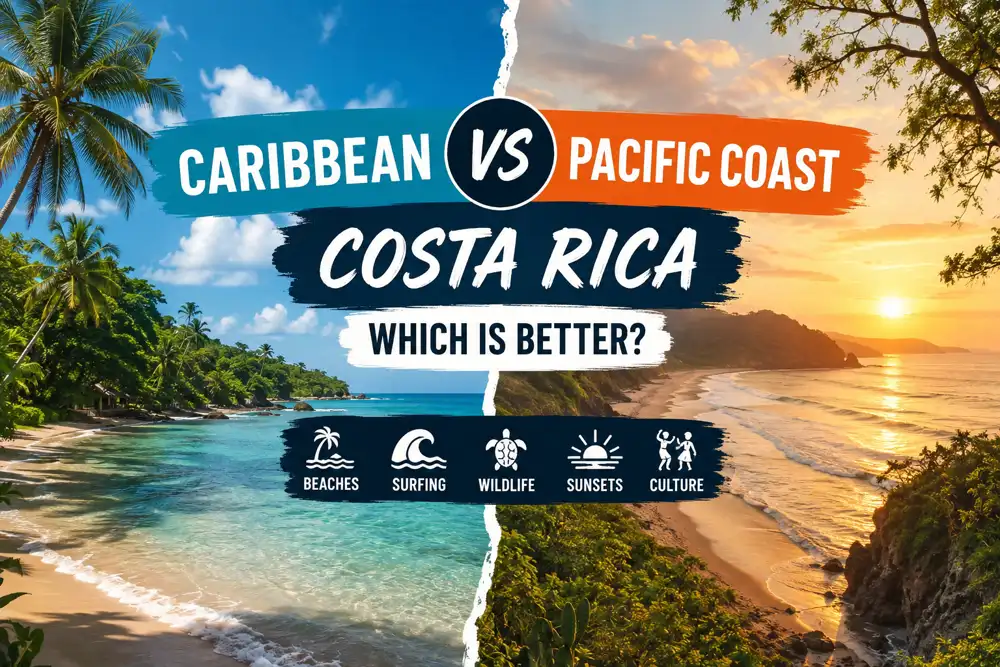
Caribbean vs Pacific Coast | Which Is Better?
Caribbean vs Pacific Coast in Costa Rica is one of the biggest decisions travelers face when planning a Costa Rican beach vacation. Both sides offer tropical scenery, memorable best beaches, wildlife, warm water, and laid-back coastal towns, but the actual travel experience can feel surprisingly different. At Things to do Global, our short answer is simple: choose the Pacific Coast for greater destination variety, established resorts, surfing, sunsets, and easier multi-stop itineraries; choose the Caribbean Coast for lush jungle, Afro-Caribbean culture, coral reefs, wildlife, and a more relaxed atmosphere.
Costa Rica sits between the Pacific Ocean and Caribbean Sea, and its mountain ranges help create noticeably different weather patterns on the two sides. That means the best coast for your trip depends not only on what you want to do but also on when you plan to visit.
This island guide-style comparison covers beaches, weather, surfing, swimming, wildlife, nightlife, accommodation, transportation, and the overall atmosphere so you can confidently decide between Costa Rica’s two spectacular coastlines.
Table of Contents
Caribbean vs Pacific Coast in Costa Rica: Quick Comparison
If you’re short on time, here’s the easiest way to compare the two.
| Category | Caribbean Coast | Pacific Coast |
|---|---|---|
| Overall atmosphere | Relaxed, colorful, culturally distinctive | Varied, developed, adventure-focused |
| Beaches | Jungle-backed, black and golden sand | Huge variety of white, golden and darker beaches |
| Weather | Humid with rain possible year-round | More clearly defined dry and rainy seasons |
| Surfing | Excellent in selected locations | Greater number of famous surf destinations |
| Swimming | Several calm coves and reef-protected areas | Many options, but conditions vary considerably |
| Wildlife | Sloths, monkeys, turtles and tropical birds | Monkeys, macaws, whales and marine wildlife |
| Snorkeling | Particularly good around Cahuita | Excellent around selected offshore destinations |
| Resorts | Smaller hotels and eco-lodges | Wider choice of resorts and luxury properties |
| Culture | Strong Afro-Caribbean influence | Mix of beach, surf and traditional Costa Rican culture |
| Sunsets | Less prominent over the sea | Spectacular Pacific sunsets |
| Best for | Culture, jungle and slower travel | First visits, variety, surfing and resort trips |
There isn’t one universal winner in the Caribbean vs Pacific Coast in Costa Rica debate. The better coast is the one that matches your travel style.
What Is the Caribbean Coast of Costa Rica Like?
Costa Rica’s Caribbean shoreline stretches along the eastern side of the country and has a distinctly tropical personality.
Places such as Puerto Viejo de Talamanca, Cahuita, Manzanillo, and Tortuguero combine dense greenery with wildlife, beaches and distinctive local culture. The southern Caribbean is especially appealing if you enjoy traveling at a slower pace.
The experience isn’t simply about lying on the beach. Music, Caribbean-influenced food, rainforest, cycling, snorkeling and wildlife encounters become part of the trip.
Best Places on Costa Rica’s Caribbean Coast
Puerto Viejo is one of the most popular bases. It combines restaurants, nightlife, beaches and easy access to surrounding coastal attractions.
Cahuita is ideal for travelers interested in wildlife, rainforest and snorkeling. Cahuita National Park protects coastal forest and coral reef environments.
Manzanillo feels quieter and more remote, making it attractive for travelers looking to escape busy resort areas.
Tortuguero, farther north, provides a completely different experience centered around canals, rainforest and sea turtle conservation.
Together, these destinations make the Caribbean much more diverse than its relatively compact tourism zone might initially suggest.
What Is Costa Rica’s Pacific Coast Like?
The Pacific Coast covers a much larger tourism area and offers considerably more variety.
Northern Guanacaste has dry tropical landscapes, established resorts and beautiful beaches. The Central Pacific includes popular destinations such as Jacó and Manuel Antonio, while farther south you’ll find Uvita, Dominical and the wildlife-rich Osa Peninsula.
This diversity makes the Pacific particularly convenient for first-time visitors.
You can build an itinerary around surfing, luxury hotels, wildlife, national parks, fishing, waterfalls or simply finding great swimming spots.
Best Places on Costa Rica’s Pacific Coast
Guanacaste is a strong choice for sunshine, resort stays and beach hopping. Popular areas include Tamarindo, Playa Flamingo and the Papagayo region.
Manuel Antonio combines rainforest, wildlife and picturesque beaches, making it an excellent destination for travelers who want nature without completely sacrificing tourism infrastructure.
Dominical attracts surfers and travelers looking for a more casual atmosphere.
Uvita provides access to beaches and Marino Ballena National Park and makes a good base for nature-focused trips.
The Osa Peninsula takes things further, offering remote rainforest and exceptional biodiversity.
Caribbean vs Pacific Coast: Which Has Better Beaches?
This may be the most subjective part of comparing the Caribbean vs Pacific Coast in Costa Rica.
The Caribbean has a tropical, intimate appearance. Dense greenery frequently grows close to the sand, and beaches can range from dark volcanic-looking stretches to lighter tropical shores.
The Pacific wins on sheer variety. Its coastline includes wide surf beaches, sheltered bays, rugged headlands and postcard-worthy coves.
Choose the Caribbean Beaches If You Want:
A jungle-meets-ocean setting, fewer huge resorts, colorful coastal towns, snorkeling opportunities and a slower beach experience.
Choose the Pacific Beaches If You Want:
More beach choices, spectacular sunsets, established resort destinations, famous surf breaks and easier beach-hopping itineraries.
Travelers specifically searching for the best beaches will probably find more options along the Pacific, while those looking for atmosphere and tropical character may prefer the Caribbean.
For more coastal inspiration around the world, explore our beaches and islands travel guides.
Weather: Which Coast Should You Visit and When?
Weather is one of the most important differences between the two coasts.
Costa Rica’s Pacific region generally experiences a clearly defined dry period and rainy season. The official Costa Rica tourism authority explains that the Pacific’s dry season generally runs from December through March, with April acting as a transition period before the wetter months.
The Caribbean does not follow exactly the same pattern. Rainfall can occur throughout the year, while relatively drier periods commonly occur around February–March and September–October.
That second Caribbean dry period is particularly interesting because September and October can be among the wetter months on the Pacific side.
You can review regional conditions through the official Costa Rica climate guide before finalizing your itinerary.
Best Coast From December to March
The Pacific Coast is generally the easier choice if sunny beach weather is your priority.
Best Coast in September and October
Consider the Caribbean Coast, particularly the southern Caribbean.
Weather is never completely predictable in a tropical country, however, so leave some flexibility in your itinerary.
Which Coast Is Better for Swimming?
Both coasts have excellent swimming spots, but never assume that a beautiful-looking beach is automatically safe for swimming.
Currents, tides and surf conditions vary by location and day.
On the Caribbean side, protected or calmer sections around Cahuita and Punta Uva can offer appealing swimming conditions when the sea is suitable.
The Pacific also has numerous swimming beaches, particularly protected bays and calmer sections of Guanacaste.
If swimming is your main priority, research the specific beach rather than choosing an entire coastline based on swimming alone. Pay attention to local signs and warnings, and ask locally about current ocean conditions before entering unfamiliar water.
Caribbean vs Pacific Coast for Surfing
For dedicated surfers, the Pacific Coast generally wins.
Tamarindo, Santa Teresa, Nosara, Dominical, Jacó and Pavones are among the names that have helped establish Costa Rica as an international surfing destination.
The Caribbean shouldn’t be dismissed, though. Puerto Viejo’s area has powerful waves and an established surf culture.
Beginners will often find it easier to choose a Pacific surf town because there are numerous surf schools and destinations catering to different ability levels.
Experienced surfers may find worthwhile waves on either coast depending on seasonal conditions.
Which Coast Is Better for Wildlife?
Wildlife is exceptional on both sides, but the experiences differ.
On the Caribbean Coast, you may encounter sloths, monkeys, toucans and other tropical birds. Tortuguero is internationally known for sea turtles, while Cahuita combines coastal rainforest and marine environments.
The Pacific has its own impressive wildlife.
Manuel Antonio is famous for rainforest animals, while the Osa Peninsula and Corcovado region are among Costa Rica’s outstanding biodiversity destinations. Offshore Pacific waters also provide opportunities for whale watching and other marine encounters.
Choose the Caribbean for turtles, rainforest and compact wildlife experiences.
Choose the Pacific for broader wildlife variety and marine excursions.
Nature lovers won’t really lose either way.
Snorkeling and Diving: Caribbean or Pacific?
The answer depends on what kind of underwater experience you’re after.
The Caribbean is particularly appealing for accessible snorkeling around coral reef environments such as Cahuita when weather and water conditions cooperate.
The Pacific provides more extensive opportunities for boat-based diving and snorkeling excursions. Isla del Caño, for example, is renowned for marine experiences off Costa Rica’s southern Pacific region.
For casual snorkeling near shore, consider the Caribbean.
For dedicated diving and marine excursions, the Pacific often provides greater variety.
Which Coast Has Better Culture and Food?
This category strongly favors the Caribbean Coast if you’re seeking a noticeably distinctive regional culture.
Costa Rica’s Caribbean region has important Afro-Costa Rican and Caribbean influences reflected in its food, music and communities.
Around Puerto Viejo and Limón Province, visitors can experience flavors and dishes influenced by Caribbean culinary traditions alongside classic Costa Rican food.
The Pacific also has excellent restaurants and regional culture, but many major beach towns have become more internationally oriented.
If local experiences, food and cultural atmosphere matter as much as beaches, give the Caribbean serious consideration.
Which Coast Has Better Hotels and Resorts?
The Pacific Coast has the advantage for accommodation variety.
Guanacaste and the Papagayo area offer luxury resorts, villas and upscale hotels. Popular destinations such as Tamarindo, Manuel Antonio, Nosara and Santa Teresa provide everything from hostels to boutique properties.
The Caribbean Coast generally feels smaller-scale.
Puerto Viejo and neighboring communities feature boutique hotels, guesthouses, jungle lodges and eco-oriented accommodation.
Choose the Pacific for luxury resorts and extensive hotel choices.
Choose the Caribbean for boutique stays, eco-lodges and intimate properties.
Nightlife: Caribbean vs Pacific Coast
Both coasts can be lively, but nightlife depends heavily on the town.
Puerto Viejo has an energetic social scene with bars, music and a distinctly Caribbean atmosphere.
On the Pacific, Tamarindo, Jacó and Santa Teresa provide some of the best-known nightlife options, although each has a different character.
For a colorful, casual night out, Puerto Viejo is hard to beat.
For greater nightlife variety, the Pacific offers more choices.
Which Coast Is Easier to Reach?
For many itineraries, the Pacific has a transportation advantage.
Northern Pacific destinations can be convenient when flying through Liberia, while Central Pacific destinations are relatively straightforward additions to itineraries involving San José and the Central Valley.
The Caribbean is certainly accessible, but some locations take additional planning. Tortuguero is a perfect example: its relative isolation is part of the attraction, but reaching it is more involved than driving directly to a typical resort town.
Puerto Viejo and Cahuita are easier to incorporate into an eastern Costa Rica itinerary.
When comparing travel times, remember that distances in Costa Rica can be deceptive. Mountain roads, weather, traffic and road conditions can make relatively short distances take longer than expected.
Caribbean vs Pacific Coast for Families
For many families, the Pacific Coast is the easiest all-around option.
Its broader selection of resorts, organized tours, restaurants and tourist services makes planning straightforward. Guanacaste can work especially well for families looking for comfortable beach accommodations.
That doesn’t mean families should avoid the Caribbean.
Older children who enjoy wildlife, snorkeling, cycling and exploring may love Cahuita or Puerto Viejo.
Families should choose according to activity level rather than simply picking the most popular coast.
Caribbean vs Pacific Coast for Couples
Couples have excellent choices on either side.
The Pacific is ideal for luxury stays, ocean-view restaurants and dramatic sunset evenings. Areas such as Papagayo, Manuel Antonio and parts of the Nicoya Peninsula are popular for romantic trips.
The Caribbean provides a more bohemian alternative.
Imagine waking up in a jungle lodge, cycling between tropical beaches, eating Caribbean food and spending the afternoon beneath palm trees.
For polished romance, choose the Pacific.
For relaxed tropical romance, consider the Caribbean.
Which Coast Is Better for First-Time Visitors?
For most first-time travelers, the Pacific Coast has a slight advantage.
Why?
There are more established tourism destinations, more accommodation categories, a wider range of tours and easier combinations with famous inland attractions.
A first trip might combine Arenal or Monteverde with Guanacaste or Manuel Antonio, for example.
However, travelers who dislike resort environments or prioritize culture over tourism infrastructure might enjoy the Caribbean more.
There is no rule saying your first Costa Rican beach must be on the Pacific.
Can You Visit Both Coasts on One Trip?
Absolutely, and this can be the best solution to the Caribbean vs Pacific Coast in Costa Rica question.
If you have around two weeks, visiting both sides gives you a much broader picture of the country.
One possible route could include:
San José → Puerto Viejo/Cahuita → La Fortuna → Pacific Coast
This itinerary combines Caribbean culture and beaches with inland adventure before finishing beside the Pacific.
Avoid trying to squeeze both coasts into a very short trip. Spending too much time moving between destinations can reduce the enjoyment of a Costa Rica vacation.
With seven days, concentrate on one coast plus perhaps one inland destination.
With 10–14 days, combining both becomes much more practical.
Caribbean vs Pacific Coast in Costa Rica: Which Is Better?
So, which side wins?
Choose Costa Rica’s Pacific Coast if:
You want more best beaches to choose from, spectacular sunsets, established surf towns, extensive resorts, luxury accommodation, varied nightlife and a straightforward first-time Costa Rica itinerary.
Choose Costa Rica’s Caribbean Coast if:
You want lush rainforest, Afro-Caribbean culture, wildlife, snorkeling, boutique accommodation, distinctive food and a slower-paced tropical experience.
Overall, the Pacific Coast is the more versatile choice for most first-time visitors, particularly during the December-to-March dry season.
But the Caribbean may be the more memorable choice for travelers who value culture, jungle landscapes and laid-back communities over big resorts.
The real beauty of comparing the Caribbean vs Pacific Coast in Costa Rica is realizing that you aren’t choosing between a good coast and a bad one. You’re choosing between two genuinely different versions of Costa Rica.
FAQs About Caribbean vs Pacific Coast in Costa Rica
1. Is the Caribbean or Pacific side of Costa Rica better?
The Pacific Coast is generally better for travelers seeking destination variety, resorts, surfing and sunsets. The Caribbean is excellent for rainforest, wildlife, cultural experiences and a relaxed atmosphere.
2. Which side of Costa Rica has the best beaches?
The Pacific has a greater overall variety of best beaches, ranging from resort-friendly bays to surf beaches and remote jungle-backed stretches. The Caribbean has fewer major beach destinations but offers beautiful tropical settings.
3. Which coast of Costa Rica has clearer water?
Water clarity varies with weather, waves and rainfall rather than simply by coast. Some Caribbean reef areas can have beautiful clear water in favorable conditions, while Pacific snorkeling and diving locations can also offer excellent visibility.
4. Is Costa Rica’s Caribbean Coast worth visiting?
Yes. The Caribbean Coast offers wildlife, coral reefs, tropical beaches, Afro-Caribbean culture and communities such as Puerto Viejo and Cahuita. It can feel very different from Costa Rica’s Pacific tourism regions.
5. Which side of Costa Rica is better in September?
The Caribbean can be an excellent option during September because its seasonal rainfall pattern differs from the Pacific. September and October are among the Caribbean coast’s relatively drier periods.
6. Which coast is better for surfing in Costa Rica?
The Pacific Coast provides more famous surf destinations and a wider selection of waves and surf schools. The Caribbean also has powerful surf, particularly around Puerto Viejo.
7. Which coast is better for families?
The Pacific is usually easier for families because it offers more resorts, organized activities and tourism infrastructure. Families interested in wildlife and smaller beach towns may also enjoy the Caribbean.
8. Is the Caribbean or Pacific Coast better for snorkeling?
The Caribbean is particularly attractive for reef snorkeling around Cahuita when conditions are suitable. The Pacific offers excellent boat-based snorkeling and diving destinations, including areas around Isla del Caño.
9. Can I visit both Costa Rican coasts in one vacation?
Yes. A 10–14 day trip provides enough time for a comfortable multi-region itinerary, although around two weeks is preferable if you want to explore both coasts without rushing.
10. Which coast should I choose for my first Costa Rica trip?
For most first-time visitors, the Pacific Coast offers the easiest combination of beaches, accommodation, activities and other famous Costa Rican destinations. Choose the Caribbean instead if cultural atmosphere, rainforest and slower travel are your main priorities.
Final Thoughts
The Caribbean vs Pacific Coast in Costa Rica decision ultimately comes down to the experience you want. The Pacific provides greater variety, famous surf destinations, sunsets, resorts and convenient tourism infrastructure. The Caribbean delivers rainforest scenery, fascinating culture, wildlife and a relaxed personality that’s difficult to replicate elsewhere.
If your schedule allows, experience both. If you have to pick just one, match your travel dates and priorities to the coast rather than choosing solely because one is more famous.
Whichever direction you take, Costa Rica’s combination of tropical beaches, biodiversity and unforgettable coastal attractions gives you plenty of reasons to return.
Tags :
example, category, and, terms