in

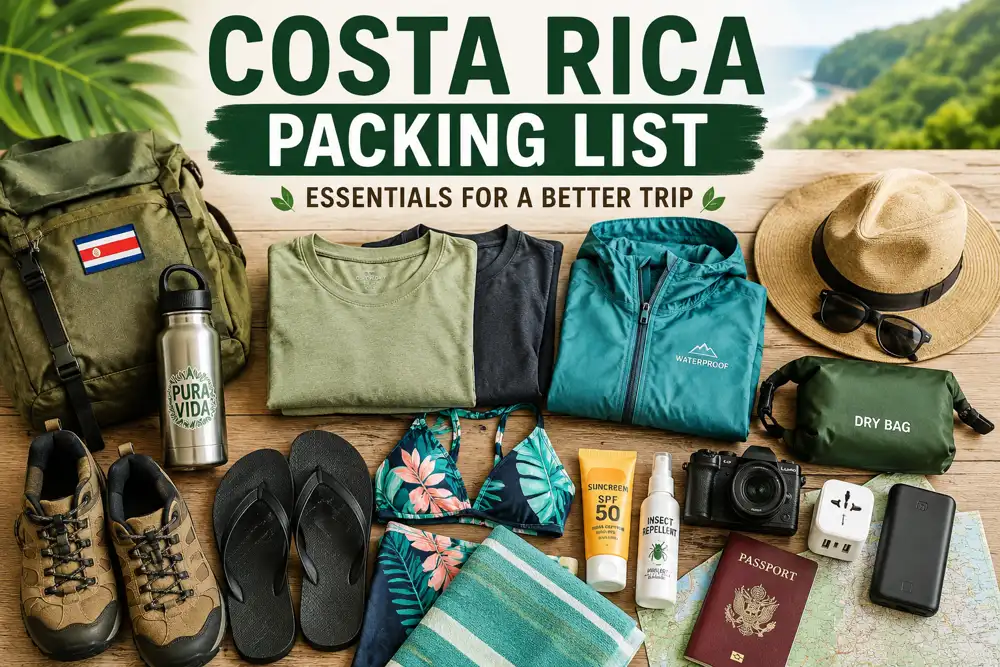
Costa Rica Packing List | Essentials for a Better Trip
Costa Rica packing list planning can feel surprisingly tricky because one trip may include humid beaches, tropical rainforests, mountain towns, volcano trails, waterfalls, and cooler high-elevation areas. What works perfectly in Guanacaste may feel completely wrong during a wet rainforest hike. That is why Things to do Global recommends packing light while choosing versatile gear that can handle sunshine, humidity, sudden rain, and outdoor adventures.
The best strategy is not to fill your suitcase with everything you might possibly need. Instead, focus on lightweight clothing, dependable rain protection, comfortable footwear, sun protection, and a few practical travel accessories. This Costa Rica packing list covers those essentials while also sharing useful travel advice, planning tips, and essential information for beaches, national parks, wildlife tours, hiking, and everyday sightseeing.
Table of Contents
Understanding Costa Rica’s Weather Before You Pack
Before deciding what to bring, remember that Costa Rica has many microclimates. Conditions can change considerably depending on altitude, coast, and region.
According to the official Visit Costa Rica tourism website, most of the country experiences a dry season from roughly mid-December through late April and a green or wetter season from May through mid-December. However, the Caribbean coast follows a different rainfall pattern.
That variation makes versatile clothing more useful than packing strictly for “hot tropical weather.”
Packing for the Dry Season
If you visit during the generally drier months, prioritize:
- Lightweight shirts
- Shorts and breathable trousers
- Swimwear
- Comfortable sandals
- Hiking or walking shoes
- Sunglasses
- Hat
- Sunscreen
- Reusable water bottle
A lightweight rain jacket is still worth bringing because conditions can vary significantly by destination.
Packing for the Green or Rainy Season
Rain protection becomes much more important during wetter months. Add:
- Lightweight waterproof jacket
- Quick-drying clothes
- Waterproof or water-resistant daypack
- Dry bag
- Extra socks
- Shoes with reliable traction
- Small umbrella if you prefer one for towns
Avoid relying heavily on thick cotton clothing because it can take a long time to dry in humid conditions.
Complete Costa Rica Packing List
Here are the essentials most travelers should consider before leaving home.
1. Lightweight, Breathable Clothing
Comfortable clothing belongs at the top of any Costa Rica packing list.
Choose fabrics that feel comfortable in warm, humid weather and dry reasonably quickly. Lightweight T-shirts, moisture-wicking tops, shorts, loose trousers, and breathable dresses can cover most everyday situations.
For approximately one week, you might pack:
- 4–6 lightweight tops
- 2–3 pairs of shorts
- 1–2 pairs of lightweight trousers
- 1 casual evening outfit
- Underwear
- Several pairs of socks
- Sleepwear
Laundry is available in many tourist destinations, so travelers taking longer trips do not necessarily need significantly more clothing.
2. Lightweight Waterproof Rain Jacket
Even travelers visiting during the dry season can benefit from carrying a compact rain jacket.
Costa Rica’s weather varies considerably across its regions, and tropical showers can arrive quickly. A breathable waterproof shell is particularly valuable when visiting rainforests, cloud forests, waterfalls, or mountainous areas.
Choose something lightweight enough to fold into your daypack.
3. Comfortable Walking or Hiking Shoes
Costa Rica is a destination where footwear matters.
You may encounter muddy trails, rocky paths, wet walkways, uneven ground, and long sightseeing days. Comfortable athletic shoes with decent grip are enough for many visitors, while serious hikers may prefer proper hiking footwear.
Before traveling, wear your shoes several times rather than taking brand-new footwear on a long hike.
4. Sandals or Flip-Flops
Bring a second pair of lightweight shoes for beaches, hotel areas, pools, and casual walks.
Sandals are especially convenient after a wet or muddy hiking day when you do not want to immediately put your closed shoes back on.
For activities involving rivers or rocky beaches, water-friendly sandals with secure straps can be more practical than loose flip-flops.
5. High-Protection Sunscreen
Tropical sunshine can be intense, including on days that feel cloudy.
Pack sunscreen that provides broad-spectrum protection and remember to reapply it according to the product instructions, particularly after swimming or sweating.
You can buy sunscreen after arriving, but bringing your preferred product from home makes your Costa Rica packing list more convenient from day one.
A wide-brimmed hat and sunglasses provide additional protection during beach days and outdoor excursions.
6. Insect Repellent
Mosquitoes and other insects can be common, particularly around humid, forested, and lowland environments.
Pack an effective insect repellent and keep a smaller bottle in your daypack for excursions.
Long lightweight trousers and long-sleeved tops can also be useful when spending time in heavily vegetated areas, especially around dawn or dusk.
7. Reusable Water Bottle
A reusable bottle is one of the simplest but most useful Costa Rica travel essentials.
Hot weather, hiking, surfing, wildlife tours, and long sightseeing days make hydration important. An insulated bottle can be especially pleasant when temperatures rise.
A refillable bottle also reduces your dependence on single-use plastic bottles.
8. Small Daypack
Your main suitcase stays at the hotel. Your daypack goes almost everywhere.
Choose a comfortable backpack large enough for:
- Water
- Sunscreen
- Rain jacket
- Camera
- Snacks
- Sunglasses
- Insect repellent
- Small towel
- Personal essentials
If your backpack is not water-resistant, consider using an internal waterproof liner or rain cover.
For more destination preparation ideas, explore our practical travel tips before organizing your trip.
9. Dry Bag or Waterproof Pouch
A dry bag is especially useful in Costa Rica.
It can protect phones, passports, cameras, chargers, and other valuables during boat trips, rafting excursions, beach days, waterfall visits, or sudden tropical downpours.
You do not necessarily need a huge bag. A compact waterproof pouch or small roll-top dry bag can handle most everyday needs.
10. Swimwear and Quick-Dry Towel
With Pacific and Caribbean beaches, waterfalls, hot springs, pools, snorkeling trips, and other water activities, swimwear is an obvious addition to your Costa Rica packing list.
Consider packing two swimsuits if swimming will be a major part of your itinerary. You can wear one while the other dries.
A microfiber travel towel is another convenient item because it takes up less suitcase space and generally dries faster than a conventional bath towel.
11. Hat and Sunglasses
A lightweight hat can make long outdoor days much more comfortable.
Combine it with sunglasses offering suitable UV protection, particularly for:
- Beach trips
- Boat tours
- Surfing areas
- Wildlife excursions
- City walking tours
- National parks
A secure sunglasses case is useful when your itinerary includes hiking or adventure activities.
12. Portable Charger and Electronics
A portable power bank can be invaluable when spending a full day away from your hotel.
Phones now serve as cameras, maps, booking confirmations, translators, communication devices, and entertainment, so a dead battery can become more than a minor inconvenience.
Your electronics checklist may include:
- Smartphone
- Charging cables
- Power bank
- Camera
- Spare camera battery
- Memory cards
- Headphones
- Travel adapter if required for your devices
Download important reservations and maps before heading into remote areas where connectivity may be inconsistent.
13. Small First-Aid and Personal Medication Kit
You do not need to bring an entire pharmacy, but a compact personal kit is sensible.
Consider items such as:
- Adhesive bandages
- Blister protection
- Antiseptic wipes
- Any regularly required medication
- Motion-sickness treatment if appropriate for you
- Personal toiletries
Keep prescription medications in appropriate packaging and carry enough for your journey. Travelers with prescription medicines should check current entry requirements and medication rules before departure.
14. Lightweight Long Pants and Long-Sleeve Shirt
Shorts and T-shirts may dominate your suitcase, but lightweight long clothing deserves space too.
Long trousers are useful for jungle excursions, cooler mountain destinations, evening insect protection, and some outdoor adventures. A lightweight long-sleeved shirt can provide similar versatility.
These layers become particularly useful if your itinerary combines beaches with places such as Monteverde or higher-elevation areas.
15. Copies of Important Travel Documents
Keep your essential documents organized and accessible.
Your travel document checklist should include your:
- Passport
- Travel insurance information
- Accommodation confirmations
- Flight details
- Driver’s licence if needed
- Rental car documentation
- Emergency contacts
- Tour confirmations
Keep secure digital backups separate from the originals. You may also want an offline copy on your phone.
What to Pack for Costa Rica’s Beaches
If Manuel Antonio, Tamarindo, Santa Teresa, Puerto Viejo, or another coastal destination is on your itinerary, your Costa Rica packing list should prioritize lightweight beach essentials.
Bring swimwear, sandals, sunscreen, sunglasses, a hat, a reusable bottle, and a quick-drying towel.
A waterproof phone pouch can also be convenient during boat tours and beach activities.
Try not to carry unnecessary valuables when spending the day around the water.
What to Pack for Rainforests and National Parks
Costa Rica’s forests are among the country’s biggest attractions, but they require slightly different preparation.
Useful items include:
- Quick-drying clothes
- Closed-toe walking shoes
- Rain jacket
- Insect repellent
- Water bottle
- Small backpack
- Binoculars
- Waterproof pouch
- Extra socks
Binoculars are particularly worthwhile for travelers interested in spotting birds, monkeys, sloths, and other wildlife without getting close to the animals.
What to Pack for Monteverde and Cooler Areas
Not every destination in Costa Rica feels hot.
Higher elevations can be noticeably cooler, particularly during mornings and evenings. If Monteverde, volcano regions, or mountain destinations appear in your itinerary, add a lightweight sweater, fleece, or jacket.
Layering works better than carrying one bulky coat.
What to Pack for Adventure Activities
Ziplining, rafting, surfing, canyoning, hiking, and other outdoor adventures are major reasons people visit Costa Rica.
Your activity-specific Costa Rica packing list may include:
- Athletic quick-dry clothing
- Secure closed-toe shoes
- Water-friendly footwear
- Small dry bag
- Waterproof phone protection
- Hair ties
- Sports swimwear
- Change of clothes
Check your tour operator’s equipment requirements before packing specialist gear. Many adventure companies provide helmets, life jackets, harnesses, and other safety equipment needed for their activities.
Carry-On vs Checked Luggage for Costa Rica
Packing light can make moving around Costa Rica considerably easier.
If you are changing hotels frequently, taking shuttles, traveling by boat, or using domestic flights, compact luggage is particularly convenient.
Keep valuables and difficult-to-replace essentials in your carry-on, including your passport, medication, electronics, travel documents, and at least one change of clothes.
Always check the current baggage limits for your airline rather than assuming international and domestic allowances will be the same.
What Not to Pack for Costa Rica
Good planning tips are as much about leaving things behind as bringing the right equipment.
You can usually skip:
- Excessive formal clothing
- Multiple pairs of heavy shoes
- Bulky winter jackets
- Large quantities of cotton clothing
- Unnecessary valuables
- Too many toiletries
- Equipment already supplied by your tour operator
Unless your trip includes a special event or upscale venue with a specific dress requirement, Costa Rica is generally well suited to comfortable travel clothing.
Costa Rica Packing List by Trip Length
5–7 Day Trip
A carry-on-sized suitcase can work well if you pack versatile clothes and are willing to reuse items.
Focus on approximately five lightweight tops, two or three bottoms, two swimsuits, walking shoes, sandals, a rain jacket, and basic accessories.
10–14 Day Trip
Do not automatically double your clothes.
Pack approximately one week’s worth and use hotel or local laundry services when convenient. This keeps luggage manageable when moving between destinations.
Budget Guide: What Should You Bring From Home?
A smart budget guide involves deciding which essentials are worth purchasing before your trip.
Items such as your preferred sunscreen, insect repellent, quality hiking shoes, waterproof gear, and personal medications are worth arranging beforehand.
Common everyday products are available in Costa Rica, so forgetting a basic toiletry is rarely a disaster. The goal is preparation, not overpacking.
Final Costa Rica Packing Checklist
Before closing your suitcase, check that you have:
- Passport and travel documents
- Lightweight clothing
- Quick-drying shirts and shorts
- Long trousers
- Light sweater or layer
- Rain jacket
- Walking or hiking shoes
- Sandals
- Swimwear
- Sunscreen
- Insect repellent
- Hat
- Sunglasses
- Reusable water bottle
- Daypack
- Dry bag or waterproof pouch
- Quick-dry towel
- Personal medications
- Small first-aid kit
- Phone and chargers
- Portable power bank
- Camera equipment if needed
This compact approach covers most travelers without turning your suitcase into something you dread carrying.
Final Thoughts
A successful Costa Rica packing list is less about bringing more and more about choosing items that work in several situations. Lightweight clothing, dependable footwear, sun protection, insect repellent, rain gear, and waterproof storage can prepare you for most of the country’s popular experiences.
Remember that Costa Rica’s climate varies by coast, elevation, and season. Check the forecast for the actual destinations on your itinerary shortly before departure and adjust accordingly.
With sensible travel advice, realistic planning tips, and the right essential information, you can spend less time worrying about your luggage and more time enjoying beaches, forests, wildlife, waterfalls, volcanoes, and everything else that makes Costa Rica worth exploring.
Frequently Asked Questions About Packing for Costa Rica
1. What should I pack for a trip to Costa Rica?
A basic Costa Rica packing list should include lightweight quick-drying clothes, walking shoes, sandals, swimwear, sunscreen, insect repellent, a rain jacket, reusable water bottle, daypack, and personal travel essentials.
2. Do I need a rain jacket in Costa Rica?
Yes, a lightweight rain jacket is useful even outside the wetter months. Costa Rica has multiple microclimates, so weather conditions can vary between regions.
3. Should I bring hiking boots to Costa Rica?
Hiking boots are useful for demanding trails, but comfortable athletic or trail shoes with good grip may be sufficient for lighter walks and sightseeing.
4. What clothes should women pack for Costa Rica?
Lightweight tops, shorts, breathable trousers, casual dresses, swimwear, comfortable shoes, sandals, a light rain jacket, and a warmer layer for higher elevations make a versatile wardrobe.
5. What clothes should men pack for Costa Rica?
Breathable T-shirts, lightweight shorts, quick-drying trousers, swimwear, comfortable walking shoes, sandals, rain protection, and a lightweight long-sleeved layer cover most trips.
6. Should I bring jeans to Costa Rica?
You can, but heavy denim can feel uncomfortable in hot, humid weather and dries slowly when wet. Lightweight trousers are generally more versatile for active trips.
7. Do I need warm clothes in Costa Rica?
For beach destinations, usually not much. However, a light sweater or jacket can be useful for mountainous and higher-elevation destinations as well as cool mornings or evenings.
8. What should I pack for Costa Rica during the rainy season?
Prioritize a waterproof jacket, dry bag, quick-drying clothing, extra socks, water-resistant footwear, and a backpack rain cover or waterproof liner.
9. Can I travel to Costa Rica with only a carry-on?
Yes. Many travelers can manage with carry-on luggage, especially when choosing versatile clothing and doing laundry during longer trips. Check your airline’s baggage rules before departure.
10. What is the most commonly forgotten Costa Rica packing essential?
Rain protection and waterproof storage are easy to underestimate. A compact rain jacket and waterproof pouch can become extremely useful during rainforest trips, boat tours, and unexpected showers.
Tags :
example, category, and, terms