in

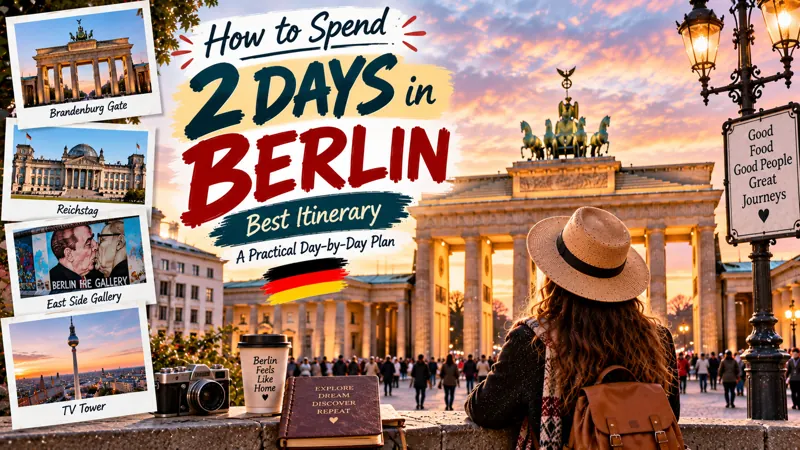
How to Spend 2 Days in Berlin – Best Itinerary | A Practical Day-by-Day Plan
How to spend 2 days in Berlin – the best travel itinerary requires clear priorities because Germany’s capital is too large and historically complex for a complete weekend. Things to do Global combines the central government district, Berlin Wall history, one museum and neighbourhood culture into a practical day-by-day route.
The goal is not to enter every attraction. Berlin’s memorials need time for interpretation, while distances that look short on a map may require transit. Book the Reichstag if it matters, choose one major museum and leave room for contemporary Berlin.
Table of Contents
Before Your Berlin Weekend
Mitte provides easy landmark access, Friedrichshain suits nightlife and the East Side Gallery, Kreuzberg offers food and creative culture, and Charlottenburg feels more traditional. Choose accommodation near U-Bahn or S-Bahn service.
Understand fare zones and ticket validation before the first ride. Berlin Brandenburg Airport generally requires a wider zone than the central districts. Download an official route tool and keep a portable charger.
Day 1 Morning: Brandenburg Gate and Government Berlin
Start how to spend 2 days in Berlin – the best travel itinerary at the Brandenburg Gate before the busiest hours. Walk to the Reichstag, Spree river and government buildings. Demonstrations or state events can redirect pedestrians.
Reichstag Dome
The glass dome offers city views and an architectural perspective on German democracy. Advance registration and identification are normally required. Arrive before the stated security time and follow current bag restrictions.
Memorial to the Murdered Jews of Europe
Visit the field of stelae and, if open, the information center. This is a memorial to victims, not a playground or fashion backdrop. Avoid climbing, loud behavior and staged photographs.
Day 1 Midday: Unter den Linden and Museum Island
Walk along Unter den Linden toward Bebelplatz and Museum Island. Choose one collection rather than rushing through several. Renovation projects mean buildings and galleries change; check the current museum map.
If museums are not your priority, continue to Berlin Cathedral surroundings and the Humboldt Forum, selecting exhibitions that add context. Eat in the broader center or move toward a neighborhood with better-value options.
Day 1 Afternoon: Alexanderplatz and East Side Gallery
Alexanderplatz is a transport hub and a useful view of postwar urban Berlin. Reserve the TV Tower only if panoramic views are a priority and visibility is good.
Continue by S-Bahn or tram toward the East Side Gallery. The murals occupy a surviving Wall section beside the river. Stay on public paths, avoid touching artwork and protect valuables in crowded areas.
Day 1 Evening: Kreuzberg or Friedrichshain
Choose one district for dinner. Berlin’s food culture includes Turkish, Vietnamese, Middle Eastern, German and modern plant-based cooking. Read menus and ask clearly about allergens.
Nightlife ranges from relaxed bars to clubs with strict door policies. Admission is never guaranteed, and a two-day sightseeing schedule does not combine well with an unplanned all-night queue.
Day 2 Morning: Berlin Wall Memorial
Begin at Bernauer Strasse, where the Berlin Wall Memorial explains the border system, escapes and divided neighborhoods. Combine the outdoor site with its documentation center when open. Allow at least ninety minutes.
This stop provides deeper context than the East Side Gallery alone. Read personal stories and maps rather than treating the remaining structures as scenery.
Day 2 Midday: Choose a Historical Museum
Select the Topography of Terror for Nazi-era documentation, the German Historical Museum when relevant exhibitions are open, or the Jewish Museum for German-Jewish history and architecture. Each deserves focused attention.
Museum schedules, renovation and timed entry change. Check the official site and avoid placing two emotionally demanding documentation centers back-to-back without a break.
Day 2 Afternoon: Tiergarten and Charlottenburg Option
In good weather, walk through Tiergarten toward the Victory Column or relax near the lake paths. Keep to designated routes and share paths respectfully with cyclists.
Alternatively, travel to Charlottenburg Palace for royal interiors and gardens. This creates a longer transit commitment, so choose it instead of Tiergarten rather than adding both superficially.
Day 2 Evening: Neighborhood Berlin
End with Prenzlauer Berg, Kreuzberg, Neukolln or Charlottenburg according to your interests. Browse independent shops, enjoy a reserved dinner or attend a concert. This final block supplies local experiences beyond monuments.
Getting Around Berlin
U-Bahn, S-Bahn, trams and buses cover the city. Choose a ticket for the correct zones, passengers and validity period, then validate when required. Keep it until the journey ends because inspections are common.
Walking links central sites, but Berlin is not a compact old town. Group stops geographically and check late-night service. Cycle only when comfortable with local lanes, signals and winter conditions.
Tickets and Budget
Register for the Reichstag, reserve high-demand museums or TV Tower slots, and book a special performance. Many memorials and public spaces are free, making a thoughtful Berlin trip plan possible across different budgets.
The official visitBerlin portal lists current events and visitor information. Find additional travel itineraries when planning a longer weekend itinerary or regional connection.
Where to Eat
Avoid relying only on restaurants beside the Brandenburg Gate or Alexanderplatz. Neighborhood food halls, bakeries and independent restaurants often provide more variety. Carry some payment flexibility because card policies differ.
Communicate dietary needs carefully. Street-food stalls can have shared fryers and surfaces, while traditional dishes may contain pork, dairy or gluten. Tap water policies and service customs vary by venue.
Seasonal Adjustments
Summer offers long daylight but busy attractions. Winter brings short days, possible ice and strong indoor culture. December market schedules and holiday closures need separate planning.
Rain is a reason to reorder the day, not cancel it. Move a museum into the wet period and visit exposed Wall sites during the clearest window. Severe heat also requires water and indoor breaks.
Safety and Respect
Keep phones and wallets secure on crowded trains and at markets. Buy tickets only through official machines or channels. Avoid isolated park routes late at night when unfamiliar with the area.
Berlin’s memorial landscape addresses persecution, war and division. Read signs, lower your voice and follow photography guidance. Supporting neighborhood businesses and limiting late-night residential noise are part of responsible travel.
If Your Interests Are Different
Art-focused travelers can spend most of Day 1 on Museum Island and replace Alexanderplatz with another collection. Cold War specialists should prioritize the Wall Memorial, Palace of Tears or a carefully chosen documentation center. Families may prefer the Natural History Museum, parks and shorter historical visits with age-appropriate explanations.
Architecture enthusiasts can add the Hansaviertel, Bauhaus-related sites or modern government buildings, but these require additional transit. Club-focused visitors should reduce the next morning’s schedule instead of pretending an all-night event and an early museum booking are compatible.
Arrival and Departure Strategy
Berlin Brandenburg Airport is outside the central sightseeing area, so a flight day is not a full city day. Check which regional or S-Bahn service is included in your ticket, and do not board a premium train with the wrong fare. Station construction and platform changes are common enough to justify extra time.
If leaving on Day 2, store luggage with an authorized service and finish near a direct airport connection. Avoid a distant palace, late restaurant booking or non-refundable attraction before departure.
Travel with a comfortable buffer.
Frequently Asked Questions
1. Are two days enough for Berlin?
Two days cover major historical themes and one or two neighborhoods, but four days are better for museums and contemporary culture.
2. Where should first-time visitors stay?
Mitte is convenient for landmarks; Friedrichshain and Kreuzberg suit nightlife and food when connected to transit.
3. Do I need to book the Reichstag?
Yes, advance registration is normally required for dome visits, along with identification and security screening.
4. Which museum should I choose?
Pick based on interest: Museum Island art, Topography of Terror documentation, Jewish Museum history or another current collection.
5. Is Berlin walkable?
Central clusters are walkable, but the city is large. Public transport is essential for an efficient weekend.
6. What transport ticket do I need?
That depends on zones, group size and duration. Airport trips often require coverage beyond central Berlin.
7. Is the Berlin Wall Memorial free?
Much of the memorial and documentation is generally accessible without charge, but verify current exhibitions and hours.
8. Can families follow this plan?
Yes, with shorter museum visits, parks and breaks. Discuss difficult historical subjects in an age-appropriate way.
9. What should I do in bad weather?
Prioritize museums, documentation centers, galleries, food experiences and a concert, then move outdoor sites to clearer hours.
10. What is the biggest itinerary mistake?
Underestimating distances and treating serious memorials as quick photo stops.
Final Thoughts
The best version of how to spend 2 days in Berlin – the best travel itinerary balances history with the living city. Give one day to central landmarks and the East Side, then use the second for the Wall Memorial, one deeper museum and a neighborhood evening. Focus creates a more meaningful weekend than a longer checklist.
Tags :
example, category, and, terms