in

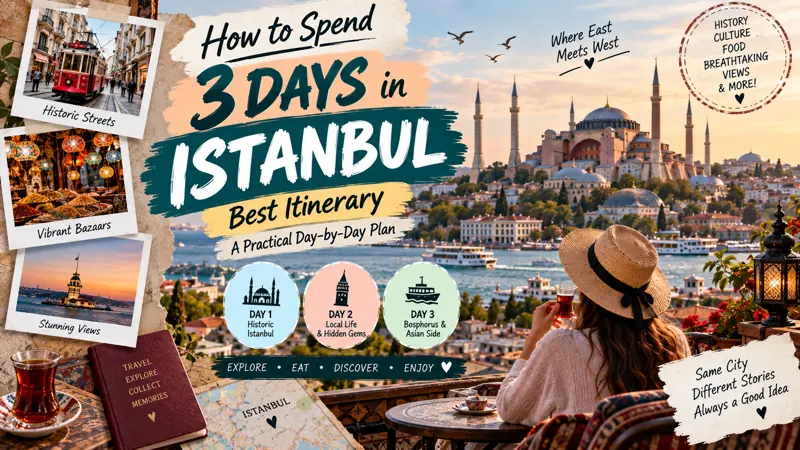
How to Spend 3 Days in Istanbul – Best Itinerary | A Practical Day-by-Day Plan
How to spend 3 days in Istanbul – the best travel itinerary begins with a simple rule: explore one district at a time. In this practical guide, Things to do Global combines imperial landmarks, waterfront views, bazaars, neighborhood food and time on both continents without turning your visit into a race.
Istanbul is enormous, and traffic can make short distances surprisingly slow. This trip plan keeps Day 1 in historic Sultanahmet, Day 2 around the bazaars and Bosphorus, and Day 3 between Galata, Beyoglu and the Asian side. Attraction hours, worship access and ticket rules change, so confirm them on official websites shortly before visiting.
Table of Contents
Before Your Three Days in Istanbul
Stay near Sultanahmet if history is your priority, or around Karakoy and Galata for restaurants, nightlife and easier access to several districts. Sultanahmet becomes quiet at night; Beyoglu is livelier but can be noisy. Whichever base you choose, being close to a tram, metro or ferry stop saves valuable time.
Purchase a reloadable Istanbul public-transport card after arrival and keep a bank card plus some Turkish lira. Comfortable shoes, modest mosque clothing and a light layer belong in your day bag. Book only the sights you truly care about; leaving room for tea, ferries and unplanned streets is part of the experience.
Day 1: Sultanahmet and the Byzantine-Ottoman Core
The first day of how to spend 3 days in Istanbul – the best travel itinerary focuses on the compact historic peninsula. Start early at Sultanahmet Square, where Hagia Sophia, the Blue Mosque and the former Hippodrome sit within a few minutes of one another.
Morning: Hagia Sophia and the Blue Mosque
Visit Hagia Sophia as early as current visitor access allows. Its layers of Byzantine and Ottoman history make context worthwhile, so consider an accredited guide or read a reliable overview before entering. Non-worship visitor areas, dress rules and admission arrangements can change.
Cross the square to the Blue Mosque. Entry is free, but tourists wait outside during prayers. Cover shoulders and knees, remove shoes where instructed and speak quietly. Scarves may be available, although carrying your own is more convenient.
Late Morning: Hippodrome and Basilica Cistern
Walk through the Hippodrome to see the Egyptian Obelisk and Serpent Column, then descend into the Basilica Cistern. Its illuminated columns and Medusa-head bases create one of the city’s most atmospheric interiors. Reserve a timed ticket when crowds are expected and allow about an hour.
Afternoon: Topkapi Palace
After lunch, devote two to three hours to Topkapi Palace. The courtyards, treasury, imperial collections and Bosphorus views deserve more than a quick photograph. The Harem generally requires additional admission but adds valuable insight into palace life. Check the weekly closing day before fixing this travel schedule.
Evening: Dinner with a View
Finish near Sultanahmet or walk downhill toward Eminonu. Choose a restaurant with clearly displayed prices rather than accepting aggressive invitations. Try dishes such as manti, grilled fish, meze or a regional kebab, then end with baklava or kunefe.
Day 2: Bazaars, Mosques and the Bosphorus
Day 2 mixes commerce, architecture and water. Begin at the Grand Bazaar soon after opening, before its covered lanes become busiest.
Morning: Grand Bazaar and Spice Bazaar
The Grand Bazaar rewards browsing more than checklist shopping. Compare quality and prices, decide your maximum before negotiating and never feel obliged to buy after accepting tea. Sundays and public holidays can affect trading, so verify the market calendar.
Continue downhill through local shopping streets to the Spice Bazaar. Look beyond packaged souvenirs to dried fruit, nuts, tea and spices. Buy from established stalls that label products and can seal food for travel.
Midday: Suleymaniye Mosque
Climb to Suleymaniye Mosque for elegant architecture and broad Golden Horn views. The surrounding streets also offer affordable lunch options. As at every functioning mosque, schedule your visit outside prayer periods and follow staff directions.
Afternoon: Bosphorus Ferry or Cruise
A public ferry provides excellent views at a modest cost, while a guided cruise offers commentary and a fixed route. Either can reveal palaces, waterfront mansions, mosques and the bridges linking Europe and Asia. Select a licensed operator, confirm the duration and avoid unofficial sellers making unrealistic promises.
Evening: Kadikoy Food Walk
Cross to Kadikoy for one of the best local experiences in this day-by-day route. Explore the market streets, sample seasonal dishes and return by ferry with the skyline illuminated. Check the last convenient connection rather than assuming services run all night.
Day 3: Galata, Beyoglu and the Asian Side
Start at the Galata Bridge, where fishermen and commuter ferries provide a lively introduction to modern Istanbul. Walk uphill through Karakoy or use transport if steep streets are difficult.
Morning: Galata Tower and Karakoy
Galata Tower offers panoramic views but can develop long queues. Reserve ahead if possible, or enjoy street-level views from the surrounding lanes. Pause at the Kamondo Stairs and explore Karakoy’s cafés, galleries and historic passages.
Afternoon: Istiklal Avenue and Dolmabahce Option
Walk along Istiklal Avenue toward Taksim Square, visiting churches and arcades along the way. If ornate Ottoman interiors interest you more than shopping, replace part of Istiklal with Dolmabahce Palace. Do not attempt both at full depth on a short day.
Evening: Hammam or Cultural Performance
Conclude how to spend 3 days in Istanbul – the best travel itinerary with a reputable hammam or a respectful sema performance. A traditional hammam can be vigorous; review the service, privacy arrangements and health considerations before booking. Sema is a spiritual tradition, so choose a venue that explains its meaning rather than presenting it only as entertainment.
Getting Around Efficiently
Trams work well across the historic peninsula, metros cover longer urban journeys and ferries are both practical and scenic. Build extra time around rush hour. Taxis should use the meter; confirm the destination and follow the route on your phone.
The official Istanbul visitor guide is a useful place to confirm city information and current events. For more geographically sensible weekend itinerary ideas, explore our collection of travel itineraries.
Budget, Tickets and Booking Strategy
Admission costs can move quickly with inflation and policy changes, so budget by category rather than relying on old figures. Set aside money for two major paid attractions, food, local transport, a cruise or ferry, and one special experience. Reserve Topkapi Palace, Basilica Cistern, Galata Tower and a preferred hammam when dates are firm.
Free pleasures balance the budget: mosque courtyards, waterfront walks, markets, neighborhood streets and commuter ferries. Never exchange large amounts with unlicensed street dealers, and check restaurant bills before paying.
Food, Dress and Safety Tips
Eat where menus show prices and local customers are present. Tell servers clearly about allergies; sesame, nuts and dairy appear frequently. At mosques, modest dress is essential. Carry a scarf and wear shoes that are easy to remove.
Istanbul is generally manageable for alert visitors, but crowded trams and Istiklal Avenue demand care with phones and wallets. Decline unsolicited help at cash machines, ignore shoe-shine tricks and use official transport channels. Travel insurance should cover medical care, cancellations and the activities you book.
Frequently Asked Questions
1. Is three days enough for Istanbul?
Three days cover the historic core, a Bosphorus journey and several neighborhoods. Four or five days allow a slower pace and more time on the Asian side.
2. Where should a first-time visitor stay?
Sultanahmet is convenient for landmarks; Karakoy and Galata balance sightseeing with restaurants and evening atmosphere.
3. Do I need to book attractions in advance?
Book priority paid sights and hammams during busy periods, but keep at least one flexible block each day.
4. What should I wear in Istanbul mosques?
Cover shoulders and knees, remove shoes and follow local instructions. Women may be asked to cover their hair.
5. Is the Istanbulkart worth buying?
It is usually convenient for visitors taking several trams, metros, buses or public ferries; confirm the current card rules on arrival.
6. Should I take a public ferry or tourist cruise?
Choose a public ferry for value and everyday atmosphere, or a licensed guided cruise for commentary and a fixed sightseeing route.
7. Which day includes the most walking?
Day 1 is compact but museum-heavy; Day 3 includes hills around Galata and Beyoglu. Use transit when needed.
8. Can I visit Europe and Asia in three days?
Yes. A ferry to Kadikoy or Uskudar makes the Asian side easy to include without sacrificing a full day.
9. Is Istanbul suitable for families?
Yes, with shorter museum visits, ferry rides and rest breaks. Crowds, steep streets and pushchairs require planning.
10. What is the biggest itinerary mistake?
Trying to cross the city repeatedly. Group sights by district and allow time for queues, prayer closures and traffic.
Final Thoughts
The smartest answer to how to spend 3 days in Istanbul – the best travel itinerary is to combine structure with curiosity. Anchor each day in one area, reserve only high-priority experiences and use ferries whenever practical. You will see the essential landmarks while still having time to notice the food, sounds and everyday rhythms that make Istanbul unforgettable.
Tags :
example, category, and, terms