in

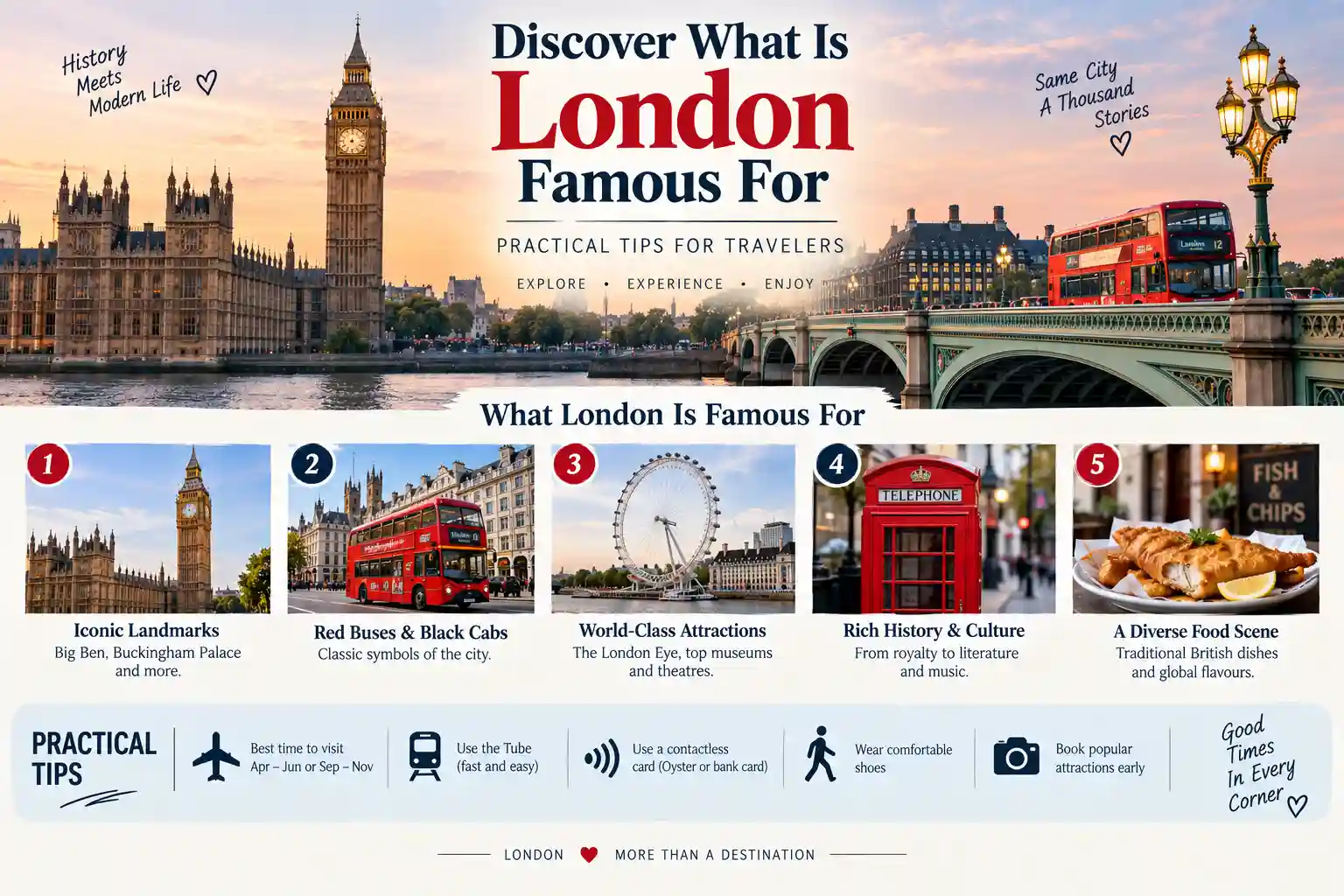
Discover What Is London Famous For | Practical Tips for Travelers
Table of Contents
What Is London Famous For?
What is London famous for is a question with dozens of good answers: royal landmarks, red double-decker buses, the Tube, world-class museums, West End theatre, historic pubs, famous markets, football, literary history and a skyline that mixes medieval towers with modern glass. At Things to do Global, we think London works best when travelers combine the headline icons with neighborhood time instead of racing from attraction to attraction.
This travel guide covers the London landmarks and experiences that define the city, plus practical destination planning for a first visit. Whether your trip ideas center on history, food, culture, shopping or family attractions, London offers enough variety to fill a weekend or several weeks.
1. Big Ben and the Palace of Westminster
Big Ben is one of the most recognizable answers to what is London famous for, although the name technically refers to the Great Bell rather than the clock tower itself. The tower is called Elizabeth Tower, and it rises beside the Palace of Westminster on the River Thames. Westminster Bridge and the South Bank provide classic viewpoints for photographs.
2. Buckingham Palace and Royal London
Buckingham Palace represents London’s continuing royal tradition. Visitors often come for the palace exterior and Changing the Guard, while seasonal openings provide access to selected State Rooms. Royal-themed places to visit also include Westminster Abbey, St James’s Park, Kensington Palace and the Royal Mews.
3. The Tower of London and Crown Jewels
The Tower of London packs nearly a thousand years of royal, military and prison history into one fortress complex. The Crown Jewels are the headline attraction, but the walls, towers and Yeoman Warder stories make it worth allowing several hours. For current attraction information and booking links, use Visit London, the city’s official visitor guide.
4. Tower Bridge
Tower Bridge is often mistakenly called London Bridge, but the dramatic bascule bridge with twin towers is a separate landmark. Walk across it for free at street level or book the exhibition to see high-level walkways and historic engineering spaces. The riverside paths around Shad Thames and the Tower of London offer excellent views.
5. Red Buses, Black Cabs and the London Underground
Transport is part of London’s visual identity. Red buses, licensed black cabs and the roundel signs of the Underground appear everywhere. The Tube is usually the fastest way to cover longer distances, but buses are better for seeing the city as you move. Contactless payment makes short urban trips relatively simple for most visitors.
6. Free National Museums
London is famous for major museums that do not charge for general admission to permanent collections. The British Museum, National Gallery, Tate Modern, Natural History Museum, Victoria and Albert Museum, and Science Museum can anchor an entire budget-friendly itinerary. Special exhibitions may require paid tickets and advance booking.
7. West End Theatre
The West End is London’s theater district, packed with long-running musicals, plays and new productions. Covent Garden, Soho and Leicester Square make it easy to combine a show with dinner or drinks. Popular performances can sell out, so booking ahead is sensible if a particular production matters to your trip.
8. The River Thames and South Bank
The Thames ties together many of the city’s most famous sights. A riverside walk can connect Westminster, the London Eye, Tate Modern, Shakespeare’s Globe, Borough Market and Tower Bridge. River cruises provide a commercial sightseeing option when you want commentary and a break from walking.
9. Historic Markets
Borough Market is known for food, Camden Market for alternative fashion and street food, Portobello Road for antiques and colorful Notting Hill, and Columbia Road for its flower market. Markets are useful places to visit when you want something more social and flexible than a timed museum entry.
10. Pubs and Afternoon Tea
Traditional pubs and afternoon tea represent two very different sides of London’s food culture. A pub lunch can be casual and inexpensive by central-London standards, while afternoon tea ranges from classic hotel service to playful themed experiences. Reserve high-end teas in advance and look beyond tourist zones for neighborhood pubs.
11. Multicultural Food
Modern London is shaped by communities from around the world, and that is reflected in its restaurants. Indian, Pakistani, Caribbean, Chinese, Middle Eastern, African and European food scenes sit alongside modern British cooking. Areas such as Southall, Brick Lane, Chinatown and Brixton can turn a meal into a cultural experience.
12. Football Culture
London has several major football clubs, including Arsenal, Chelsea, Tottenham Hotspur, West Ham United, Crystal Palace and Fulham. Match tickets can be difficult for high-demand fixtures, but stadium tours are easier to plan. Football adds another layer to what is London famous for, especially outside the traditional sightseeing circuit.
13. Harry Potter Connections
London has become a major destination for Harry Potter fans. King’s Cross, film-location walking tours, themed shops and the Warner Bros. Studio Tour outside central London all attract visitors. Studio tickets are time-specific and frequently sell out, so this is one experience to organize well before travel.
14. Literary and Pop-Culture History
Shakespeare, Dickens, Virginia Woolf, Sherlock Holmes, James Bond and countless musicians and filmmakers are connected with London. Literary houses, blue plaques, historic theaters and filming locations make it easy to build themed walking routes around personal interests.
15. Neighborhoods With Distinct Personalities
The city is too large to feel like one homogeneous destination. Westminster is monumental, Soho energetic, Notting Hill photogenic, Greenwich maritime, Hampstead leafy, Shoreditch creative and Richmond almost village-like. Choosing one neighborhood to explore slowly each day often produces better memories than crossing the city for every single attraction.
How to Plan Your First London Trip
For a short first visit, group attractions geographically. One day can focus on Westminster and the South Bank, another on the Tower of London and the City, and another on museums or neighborhoods. For more country and city inspiration, browse our global travel destinations hub before building your route.
Book the Tower of London, popular West End shows, Warner Bros. Studio Tour, major football fixtures and any must-do special exhibitions early. Leave room for free museums, parks and neighborhood walks, which balance the high cost of paid London attractions. A contactless bank card or compatible device is usually the simplest way to use public transport.
16. Royal Parks and Surprisingly Green Spaces
London is also famous for the amount of green space woven into a dense capital. Hyde Park, Kensington Gardens, Regent’s Park, St James’s Park, Greenwich Park and Richmond Park give visitors room to slow down between museums and monuments. They are especially useful on a longer trip, when another indoor attraction can start to feel repetitive. Pack a picnic, walk a section of the Serpentine, or pair Greenwich Park with the maritime museums and views toward Canary Wharf.
For families and budget travelers, parks are among the easiest things to do in London without adding another ticket to the day. Seasonal gardens, playgrounds, lakes and open lawns also make them practical places to reset an itinerary when the weather improves unexpectedly.
17. Shopping Streets, Department Stores and Fashion
From Oxford Street and Regent Street to Bond Street, Carnaby, Covent Garden and independent neighborhood shops, retail is another major part of London’s identity. Historic department stores and luxury flagships attract visitors, but markets and smaller streets often feel more distinctive. If shopping matters, plan it by neighborhood instead of crossing the city for individual stores.
London fashion ranges from heritage tailoring and classic British brands to streetwear, vintage clothing and emerging designers. Even travelers who are not serious shoppers can enjoy window displays, food halls and the architecture of older retail districts.
A Simple Way to Experience London Without Rushing
When people ask what is London famous for, the temptation is to build a huge checklist. A better approach is to choose one or two anchor attractions each day, then connect them with walking, a park, a market or a neighborhood meal. That keeps transport time under control and leaves space for the small scenes that make London memorable: buskers, riverside views, bookshops, pub conversations and unexpected historic streets.
FAQs
1. What is London most famous for?
London is famous for Big Ben, Buckingham Palace, the Tower of London, Tower Bridge, red buses, the Underground, royal history, museums, West End theatre, markets and the River Thames.
2. Is Big Ben the name of the clock tower?
Strictly speaking, Big Ben is the nickname of the Great Bell. The tower housing the clock is Elizabeth Tower.
3. How many days do you need in London?
Three to four days is a useful minimum for major highlights. Five to seven days gives you time for neighborhoods, museums and a day trip without rushing.
4. Are London museums free?
Many major national museums offer free general admission to permanent collections, although special exhibitions and some attractions charge separately.
5. What food is London famous for?
Classic choices include fish and chips, pies, Sunday roasts and afternoon tea, but London is equally famous for its multicultural restaurant scene.
6. What is the best area for first-time visitors to stay?
Westminster, South Bank, Covent Garden and areas near major Tube lines are convenient. The best choice depends on budget, nightlife preferences and which attractions matter most.
7. Is London walkable?
Central London is very walkable, but the city is enormous. Combining walking with the Tube or buses is more realistic than trying to cover everything on foot.
8. What should I book in advance?
Book high-demand attractions, popular West End shows, Warner Bros. Studio Tour, football matches and limited-capacity exhibitions as early as practical.
9. When is the best time to visit London?
London is a year-round city. Spring and early autumn can be comfortable for walking, summer has long daylight, and winter brings festive events but shorter days.
10. Is London expensive?
It can be, especially for central hotels and major attractions. Free museums, parks, markets, buses and neighborhood walks can significantly reduce daily sightseeing costs.
Final Thoughts
From Big Ben and Buckingham Palace to museums, theater, markets and neighborhood life, what is London famous for has no single answer. The city’s appeal comes from the way centuries of history sit beside constantly changing food, music, fashion and cultural scenes.
Build your itinerary around a few must-see London landmarks, then give yourself time to walk, use public transport and explore beyond the postcard views. That balance usually creates a more rewarding first trip.
Tags :
example, category, and, terms