in

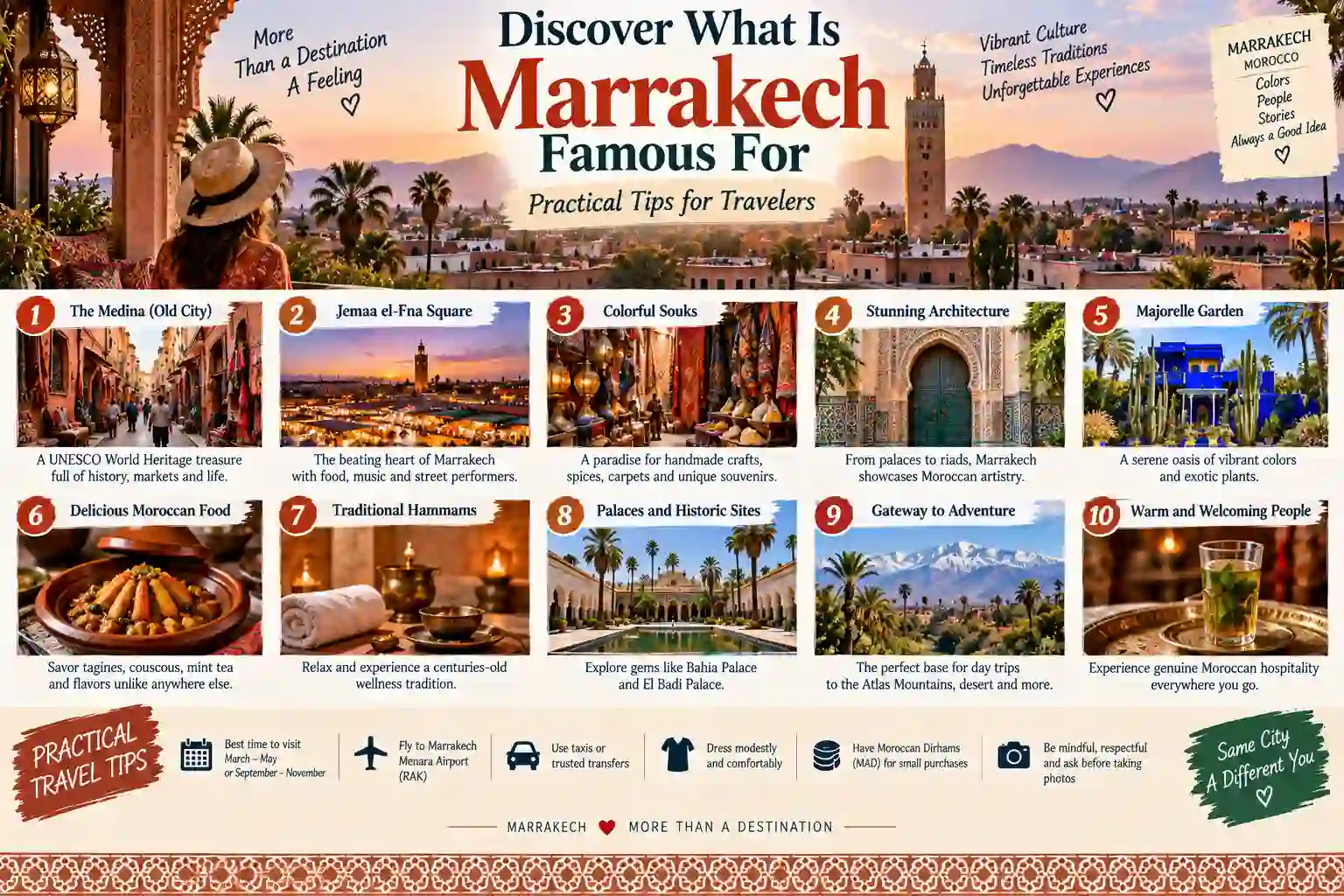
Discover What Is Marrakech Famous For | Practical Tips for Travelers
Table of Contents
What Is Marrakech Famous For?
What is marrakech famous for is best answered through its atmosphere: a maze-like medina, Jemaa el-Fna after dark, colorful souks, riads hidden behind plain doors, tiled palaces, gardens, rooftop terraces, Moroccan food, hammams, and easy access to the Atlas Mountains. At Things to do Global, we see Marrakech as a destination where the experience of moving through the city is as memorable as any single monument.
This practical travel guide covers the best-known places to visit, worthwhile trip ideas, and realistic destination planning so you can enjoy the Red City without turning every hour into a shopping or sightseeing mission.
1. Jemaa el-Fna Square
Jemaa el-Fna is the city’s most famous public space and one of the clearest answers to what is Marrakech famous for. The atmosphere changes throughout the day, but evening is when food stalls, musicians, storytellers, and crowds transform the square into a constantly moving scene. Watch from a rooftop first, then walk through at street level.
2. The Medina and Its Historic Lanes
Marrakech’s medina is a UNESCO-listed historic area filled with narrow alleys, workshops, markets, religious buildings, courtyards, and homes. Moroccan National Tourist Office’s Marrakech medina guide notes that the medina’s heritage stretches back nearly a thousand years. Getting slightly lost is normal, but offline maps and a clear meeting point are useful.
3. The Souks
The souks are among Marrakech’s best-known local experiences. Different lanes traditionally specialize in leather, metalwork, lamps, textiles, spices, carpets, baskets, and other crafts. Bargaining is common in many shops, but it should remain respectful. Decide what an item is worth to you before negotiating.
4. Riads and Courtyard Architecture
A riad is a traditional house arranged around an interior courtyard or garden. Many have been converted into guesthouses, and staying in one can be more memorable than choosing a conventional hotel. Rooftop breakfasts, patterned tiles, carved plaster, fountains, and quiet inner spaces contrast with the energy outside.
5. Bahia Palace
Bahia Palace is one of Marrakech’s most popular cultural attractions, known for decorated ceilings, tilework, courtyards, and garden spaces. Arrive near opening time if possible, because interior rooms can become crowded quickly later in the day.
6. Ben Youssef Madrasa
The historic madrasa is admired for its geometric tilework, carved cedar, stucco decoration, and central courtyard. It is a strong stop for travelers interested in architecture and photography and pairs naturally with the northern medina.
7. Koutoubia Mosque
The Koutoubia Mosque and its minaret are visual symbols of Marrakech. Non-Muslim visitors generally admire the mosque from outside, while the surrounding gardens and sightlines make it an easy landmark to include between Jemaa el-Fna and other central attractions.
8. Majorelle Garden
Majorelle Garden provides a very different atmosphere from the medina. Cobalt-blue architecture, cacti, palms, bamboo, and carefully designed paths create a calm environment that is especially popular with photographers. Timed entry can sell out, so reserve ahead during busy periods.
9. Yves Saint Laurent Connections
Marrakech became closely associated with designer Yves Saint Laurent, and the museum near Majorelle Garden explores his work and creative connection to the city. Fashion and design travelers can combine the two sites into one half-day outside the medina.
10. Moroccan Food and Rooftop Dining
Tagines, couscous, pastilla, grilled meats, salads, breads, mint tea, pastries, and fresh juices are central to the Marrakech experience. Food tours can help first-time visitors move beyond tourist menus, while cooking classes offer a more hands-on activity and a useful break from sightseeing.
11. Traditional Hammams
A hammam is one of the city’s classic wellness experiences. Options range from local bathhouses to polished spa-style facilities. Choose based on the level of comfort and guidance you want, and read the treatment description carefully so the scrubbing and bathing process is not a surprise.
12. Rooftop Terraces at Sunset
Rooftop terraces are famous in Marrakech because they offer air, space, and views above the dense medina. Sunset drinks or dinner can be a simple way to slow the pace after a day of walking and bargaining. Reservations are worthwhile for the most popular viewpoints.
13. The Atlas Mountains
The High Atlas Mountains are among the most popular day-trip places to visit from Marrakech. Excursions may include mountain villages, scenic drives, short hikes, or valleys such as Ourika. The experience changes by season, so check weather and road conditions before departure.
14. Agafay Desert Experiences
Travelers who do not have time to reach the Sahara often consider the Agafay area outside Marrakech. Its rocky, arid landscape is not the Sahara’s giant sand dunes, but it supports sunset dinners, camps, camel rides, quad-bike tours, and overnight experiences close to the city.
15. Gardens, Palaces and Hidden Courtyards
Part of the appeal of what is Marrakech famous for lies in contrasts: noisy lanes opening into quiet courtyards, dusty streets leading to green gardens, and modest exteriors hiding elaborate interiors. Build space into your itinerary to notice these transitions rather than racing only between famous names.
How Many Days Do You Need in Marrakech?
Three days works well for a first trip: one day for Jemaa el-Fna and the central medina, one for palaces, madrasa, gardens, and museums, and one for a food experience or day trip. Four or five days gives more time for the Atlas Mountains, Agafay, hammams, shopping, and relaxed rooftop evenings.
Best Time to Visit Marrakech
Spring and autumn are popular because daytime temperatures are often comfortable for walking. Summer can be extremely hot, so sightseeing is easier early and late in the day. Winter days may be pleasant, but evenings can feel cool. Pack sun protection, modest adaptable clothing, and comfortable closed shoes.
Practical Marrakech Travel Tips
Expect a sensory city and plan accordingly. Keep small cash available, confirm taxi prices or use clearly priced services, ask before photographing people, and treat persistent sales approaches calmly. In the medina, use landmark-based navigation and allow extra time because routes are rarely as direct as they appear on a map.
If Marrakech is part of a wider Morocco or international trip, browse our global travel destinations hub for more destination planning ideas.
Where to Stay in Marrakech
Staying inside the medina gives you the classic riad experience and puts major sights within walking distance, but taxis may not reach the door and finding the property can be confusing on arrival. Gueliz offers wider streets, modern hotels, restaurants, and easier vehicle access. Hivernage suits travelers looking for upscale resorts, nightlife, and larger properties.
Shopping Without Turning the Trip Into a Negotiation Marathon
Souk shopping is fun when you treat it as exploration rather than a contest. Compare quality and prices across several stalls, ask whether an item is handmade locally, and buy only when you genuinely want it. For expensive rugs, leather goods, jewelry, or antiques, request clear information about materials and shipping before agreeing to a purchase.
Photography, Etiquette and Cultural Respect
Marrakech is extremely photogenic, but people are not scenery. Ask before taking close portraits, especially of vendors and performers, and be prepared for some people to decline or request payment. Dress respectfully around religious sites, avoid blocking narrow lanes for photos, and remember that mosques may have access restrictions for non-Muslim visitors.
A little preparation also reduces friction. Save your riad location offline, carry the property phone number for arrival, keep water with you, and build short rest breaks into hot afternoons. The medina is more enjoyable when you are not trying to navigate it while tired, hungry, or rushing to a fixed appointment.
FAQs
1. What is Marrakech most famous for?
Marrakech is famous for Jemaa el-Fna, the medina and souks, riads, Moroccan food, Bahia Palace, Majorelle Garden, hammams, rooftop terraces, and trips toward the Atlas Mountains.
2. Is Marrakech worth visiting?
Yes, especially for travelers interested in culture, architecture, food, markets, design, and a city atmosphere that feels very different from most European destinations.
3. How many days do you need in Marrakech?
Three days is a good first visit. Four or five days is better if you want a mountain or desert-style excursion and more time to relax.
4. Is the Marrakech medina safe to walk around?
The central medina is heavily visited, but normal city precautions apply. Keep valuables secure, stay aware in crowded lanes, and use reliable directions or official guides when needed.
5. What should I wear in Marrakech?
Lightweight, breathable, relatively modest clothing is practical. Covering shoulders and knees is a respectful default for many cultural settings, while sun protection is essential.
6. Do you need to bargain in Marrakech?
Bargaining is common in many souk shops. Keep it friendly, know your budget, and walk away politely if you do not want to buy.
7. Is Majorelle Garden worth it?
It is especially worthwhile for design, garden, photography, and fashion interests. Book ahead during busy periods because entry can be limited by time slot.
8. Can you take a day trip to the Atlas Mountains from Marrakech?
Yes. Many guided trips visit valleys and mountain villages, and some include short walks or meals. Conditions vary by season.
9. Is Agafay the Sahara Desert?
No. Agafay is a rocky desert landscape near Marrakech. It offers desert-style camps and activities but should not be confused with the large Saharan dune fields farther away.
10. What should I book in advance in Marrakech?
Popular riads, Majorelle Garden, sought-after restaurants, hammam treatments, cooking classes, and private day trips are worth reserving ahead in peak periods.
Final Thoughts
The best answer to what is Marrakech famous for is the contrast between energy and calm: busy souks and quiet riads, crowded squares and hidden courtyards, tiled palaces and rugged mountains beyond the city.
Give yourself time to adapt to the medina, choose a few high-quality paid experiences, and protect unstructured hours for wandering, tea, rooftops, and food. That balance makes Marrakech far more enjoyable than a tightly packed checklist.
Tags :
example, category, and, terms