in

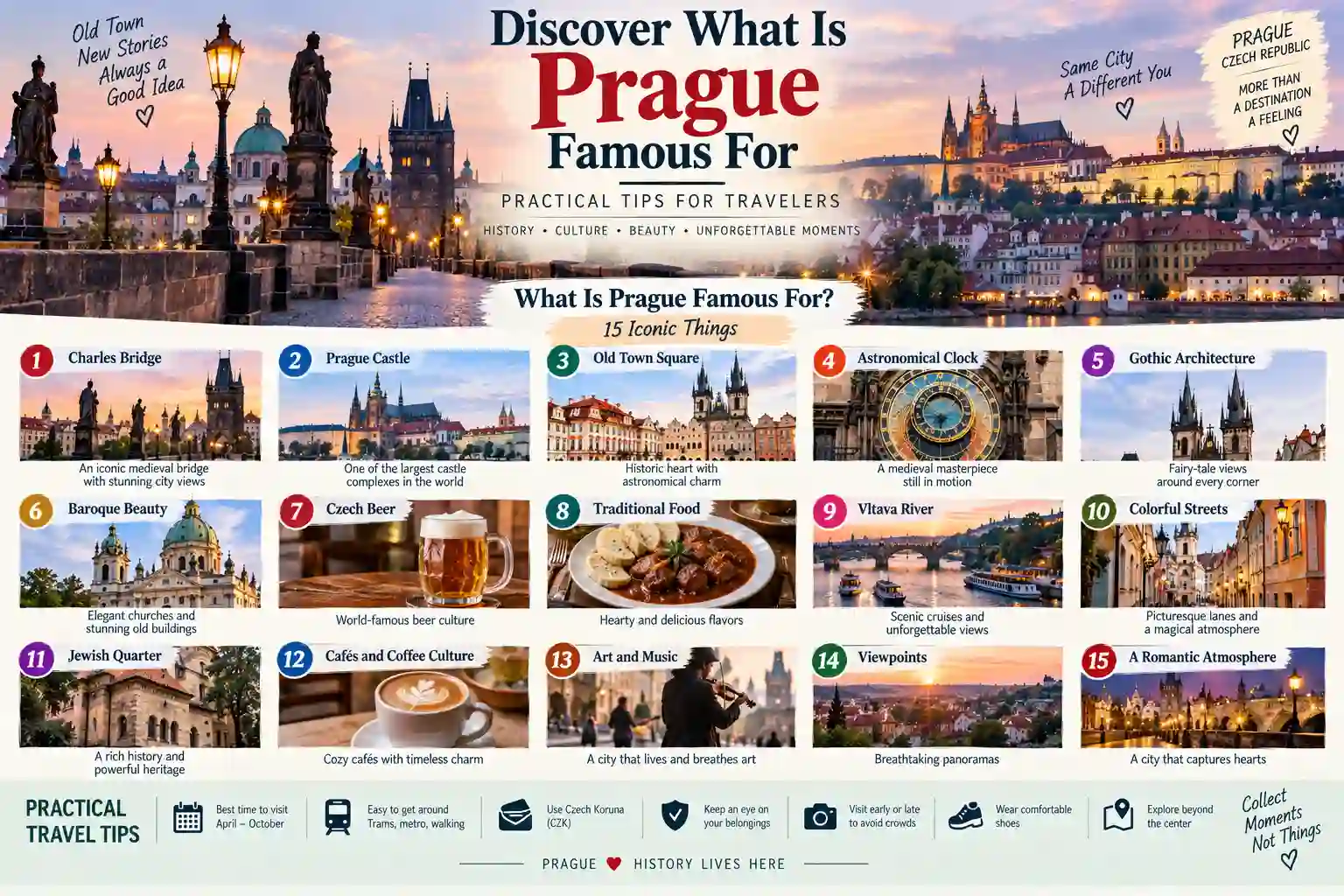
Discover What Is Prague Famous For | Practical Tips for Travelers
Table of Contents
What Is Prague Famous For?
What is prague famous for is a question with a long answer: medieval streets, a castle-filled skyline, Charles Bridge, the Astronomical Clock, Gothic towers, beer culture, classical music, Art Nouveau interiors, riverside views, and one of Europe’s best-preserved historic centers. At Things to do Global, we like Prague because many of its most memorable sights can be explored on foot.
The Czech capital works equally well as a weekend city break or a base for longer trip ideas around Central Europe. This travel guide focuses on the city’s signature experiences, practical destination planning, and the places to visit that explain why Prague has such a strong visual identity.
1. Charles Bridge
Charles Bridge is one of Prague’s defining landmarks. Construction began in the 14th century, and the stone bridge now connects Old Town with Malá Strana beneath Prague Castle. Prague City Tourism’s Charles Bridge guide describes it as one of the world’s most photographed monuments. Go around sunrise for quieter views, then return after dark for a completely different atmosphere.
2. Prague Castle
Prague Castle is a vast hilltop complex rather than a single building. St. Vitus Cathedral, courtyards, palaces, gardens, and historic lanes can easily fill half a day. Even if you skip interior tickets, the walk up to the castle and viewpoints over the red roofs are among the city’s essential places to visit.
3. The Old Town Astronomical Clock
The medieval astronomical clock on Old Town Hall has become a symbol of Prague. Every hour, visitors gather to see the moving figures and apostles. The clock is impressive, but the better experience is to combine it with the Old Town Hall tower and the surrounding square rather than treating the short display as the entire attraction.
4. Old Town Square
Old Town Square brings together colorful façades, churches, monuments, cafés, and layers of city history. It is busy, but it remains the natural orientation point for a first walk through central Prague. Wander a few streets away and the crowds thin quickly.
5. Gothic Towers and Church Spires
If you are asking what is Prague famous for visually, the answer is its skyline. The Church of Our Lady before Týn, St. Vitus Cathedral, Powder Gate, bridge towers, and numerous church spires give the center its storybook appearance. Climbing at least one tower is one of the best ways to understand the city layout.
6. Czech Beer Culture
The Czech Republic has a deep brewing tradition, and Prague offers everything from historic beer halls to modern craft breweries. Rather than chasing volume, focus on styles, proper pouring, and food pairings. Brewery tours and guided tastings can also add commercial value to a short city itinerary.
7. Malá Strana and Baroque Prague
Malá Strana, or Lesser Town, sits below the castle and feels more intimate than Old Town. Baroque churches, palace gardens, steep lanes, embassy buildings, and hidden courtyards reward slow wandering. It is also one of the best areas for early-morning photography.
8. The Vltava River
The Vltava shapes Prague’s geography and provides many of its best views. River cruises are popular, but simple riverside walks and bridge crossings are enough to appreciate the skyline. Sunset from the embankments, islands, or elevated parks creates excellent photographs without requiring a ticket.
9. Jewish Quarter and Josefov
Josefov contains some of Prague’s most significant historic sites, including synagogues, the Old Jewish Cemetery, and museum collections documenting Jewish life in Bohemia. This is an area where context matters, so allow enough time to visit respectfully rather than rushing through as a photo stop.
10. Art Nouveau and Cubist Architecture
Prague is not only medieval. Municipal House is one of the city’s best-known Art Nouveau buildings, while Prague also has a distinctive collection of Czech Cubist architecture. These styles make an excellent second-day theme after the classic Old Town and Castle route.
11. Classical Music and Historic Performance Halls
Mozart associations, opera, orchestral traditions, and beautiful concert interiors are another answer to what is Prague famous for. Performances range from major institutions to smaller tourist concerts, so check the venue and program rather than booking based on a flyer alone.
12. Café Culture and Czech Food
Traditional dishes such as roast meats, dumplings, soups, open-faced sandwiches, pastries, and modern Czech cuisine add depth to a Prague trip. Historic cafés also provide a slower side of the city, especially in cold weather when museums and interiors become more appealing.
13. Petrín Hill and Panoramic Views
Petrín Hill gives travelers green space, walking paths, gardens, and broad city views close to the historic core. The observation tower provides an elevated perspective, while the hill itself is useful when you want a quieter break from crowded squares.
14. Christmas Markets and Seasonal Atmosphere
Winter is one reason Prague appears so frequently in European trip ideas. Christmas markets, evening lights, concerts, and the possibility of snow create a strong seasonal mood. Expect cold temperatures and high demand around festive weekends, and book accommodation early.
How Many Days Do You Need in Prague?
Two full days can cover Old Town, Charles Bridge, Prague Castle, Malá Strana, and a few food or cultural stops. Three days is better if you want museums, the Jewish Quarter, Petrín, a river activity, or more relaxed neighborhoods. Four days leaves room for a day trip to places such as Kutná Hora or Karlštejn.
Best Time to Visit Prague
Spring and autumn offer comfortable sightseeing weather and attractive light. Summer brings long days but larger crowds. Winter can be atmospheric, especially around Christmas, while January and February are colder and quieter. Comfortable shoes are essential year-round because cobblestones and hills are part of the experience.
Planning Your Prague Trip
Build each day around geography. Pair Old Town with Josefov and the river, and place Prague Castle, Malá Strana, and Petrín on another day. This reduces backtracking and keeps your travel guide realistic. For more country and city inspiration, browse our global travel destinations hub.
Free and Low-Cost Things Prague Is Known For
Many of Prague’s signature experiences cost nothing. Walking Charles Bridge, exploring Old Town Square, watching the Astronomical Clock from the square, wandering Malá Strana, crossing the river at sunset, and enjoying views from public parks can fill much of a day. This makes Prague a flexible destination for travelers who want to spend selectively on castle interiors, museums, concerts, or food tours.
Where to Stay for Different Types of Trips
Stay in Old Town if you want to step outside and immediately be near headline sights, but expect higher prices and more nighttime activity. Malá Strana offers romantic streets and easy castle access, New Town provides excellent transport and restaurants, and neighborhoods such as Vinohrady or Karlín can suit travelers who prefer a more residential base with quick metro or tram links.
Common Prague Planning Mistakes to Avoid
The biggest mistake is scheduling every famous attraction at midday, when the historic center is busiest. Start with the most photographed sights early, do museums or long lunches in the busiest afternoon period, and return to Old Town after day-trippers thin out. Also avoid exchanging money at random tourist counters; check current bank or card fees and use clearly priced, reputable services.
What to Book in Advance
Prague is easy to explore spontaneously, but a few experiences benefit from advance reservations: popular concerts, special castle tours, high-demand restaurants, guided Jewish Quarter visits, and weekend activities during Christmas-market season. Keeping only one or two fixed bookings per day preserves flexibility for weather and unexpected discoveries.
FAQs
1. What is Prague most famous for?
Prague is famous for Charles Bridge, Prague Castle, the Astronomical Clock, Old Town Square, Gothic and Baroque architecture, Czech beer, classical music, and its preserved historic center.
2. Is Prague good for a weekend trip?
Yes. Two full days can cover the core sights, while three days gives more breathing room for museums, neighborhoods, viewpoints, and food experiences.
3. What is the best area to stay in Prague?
Old Town is convenient for first-time sightseeing, Malá Strana is atmospheric and quieter at night, while New Town can offer good transport access and a wider accommodation range.
4. Is Prague walkable?
Very. Most central attractions are within walking distance, though hills, cobblestones, and long sightseeing days make comfortable footwear important.
5. Is Charles Bridge free?
Yes. Walking across Charles Bridge is free, although nearby towers and some attractions charge admission.
6. Is Prague expensive?
Prague can be more affordable than some Western European capitals, but prices are higher in the historic center. Accommodation, restaurants, and attractions vary widely by location and season.
7. When is Prague least crowded?
Weekday mornings and the colder months outside major holidays tend to be quieter. Sunrise is the best time for famous places such as Charles Bridge.
8. What food should I try in Prague?
Try Czech soups, roast meat dishes, dumplings, open-faced sandwiches, pastries, and modern Czech cuisine. Beer-focused travelers can also explore local breweries and traditional pubs.
9. Do I need public transport in Prague?
You can walk much of the center, but trams and metro lines are useful for saving time, reaching outer neighborhoods, and returning after long days on foot.
10. Is Prague suitable for families?
Yes. Castle courtyards, towers, river trips, parks, trams, interactive museums, and compact sightseeing routes can work well for families.
Final Thoughts
From Charles Bridge and castle towers to beer halls, Art Nouveau interiors, river views, and the Astronomical Clock, what is Prague famous for is really the combination of preserved history and an unusually walkable city center.
Plan by neighborhood, start famous sights early, and leave time for cafés, parks, riverside walks, and evening streets. Prague feels most rewarding when you experience the spaces between its headline attractions.
Tags :
example, category, and, terms