in

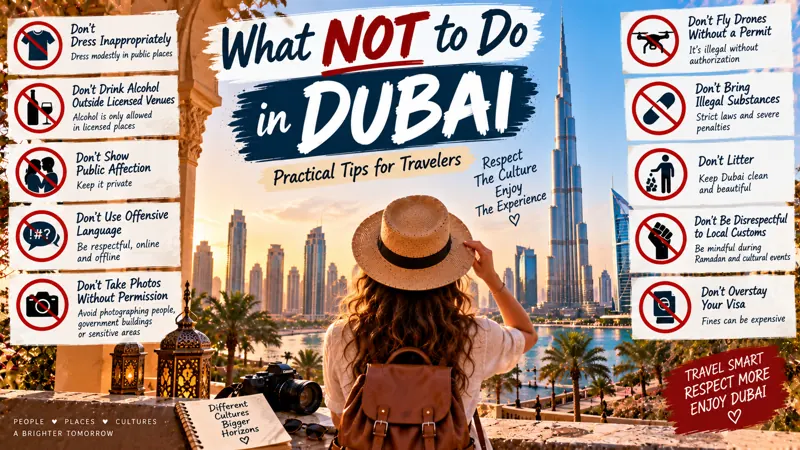
What NOT to Do in Dubai | Practical Tips for Travelers
What not to do in Dubai is less complicated than many first-time visitors expect. Dubai is an international tourism hub, but it is also part of the United Arab Emirates, with local laws and social expectations that may differ from those at home. At Things to do Global, the best advice is simple: be respectful in public, follow posted rules, use common sense with photography and alcohol, and check official guidance when you are unsure.
Most visitors have an easy trip because they behave normally and respectfully. This travel guide focuses on mistakes that matter while correcting outdated internet myths.
Table of Contents
1. Do Not Ignore Local Laws and Posted Rules
The most important answer to what not to do in Dubai is not a quirky etiquette rule: do not assume laws work exactly as they do in your country.
Rules can apply to public behaviour, transport, photography, controlled substances and online activity. Pay attention to signs in malls, beaches, mosques, Metro stations and tourist attractions.
For current official guidance on dress and photography, consult the UAE Government social responsibility guidance.
2. Do Not Photograph People Without Permission
Dubai is highly photogenic, but people are not scenery. Avoid close-up photographs of strangers without consent, especially families and women who may not want to appear in a tourist’s camera roll or social media.
Also follow restrictions around government, military, security and other sensitive locations. If signs say photography is prohibited, put the camera away.
A wide skyline shot is different from intentionally photographing a stranger. When in doubt, ask politely.
3. Do Not Dress Inappropriately for the Setting
You do not need traditional clothing for everyday tourism, but beachwear belongs at the beach or pool. Shopping malls, heritage areas and public buildings are better suited to normal, non-transparent clothing that provides reasonable coverage.
Mosques require more conservative dress. Some visitor mosques provide appropriate garments, but you should still check the rules before arriving.
This is not about panicking over a pair of shorts. It is about matching your clothing to the places to visit on your itinerary.
4. Do Not Be Aggressive, Insulting or Obscene in Public
Public arguments can escalate quickly when insults, threats or obscene gestures are involved. If someone cuts in front of you, a driver annoys you, or a service problem occurs, stay calm and handle it without abusive language or gestures.
The same principle applies online: avoid threatening, defamatory or deliberately offensive content.
5. Do Not Drink Alcohol in Unlicensed Public Places
Alcohol is available to tourists in licensed hotels, restaurants, bars and venues, but that does not mean you can drink anywhere you like.
Do not carry an open drink onto the street, beach or public transport unless the venue and event explicitly permit it. Public intoxication and disruptive behaviour can also create serious problems.
If drinking is part of your trip ideas, choose licensed venues and arrange safe transport back to your accommodation.
6. Never Bring or Use Illegal Drugs
Dubai and the wider UAE have strict drug laws. Do not carry recreational drugs, cannabis products or substances that may be treated differently from those in your home country.
Prescription and controlled medicines can also have specific import requirements. Before traveling with medication, check official UAE health and customs guidance for your exact medicine rather than relying on a forum comment.
This is one area where what not to do in Dubai should be taken literally: never assume a substance is acceptable simply because it is legal where you live.
7. Do Not Ignore Medication Rules
Travelers sometimes focus on illegal drugs and forget that prescription medicines can also require documentation or approval.
Carry medicines in original packaging and bring a copy of your prescription or doctor’s letter when appropriate. Check current UAE guidance before departure if your medication contains a controlled ingredient.
Check current official guidance because classifications can change.
8. Do Not Enter Restricted Transport Areas
Dubai’s Metro and tram systems are clean and easy to use, but they have clear rules. Do not enter Gold Class or women-and-children cabins unless you are entitled to use them, and never walk onto tram tracks or restricted rail corridors.
Eating, drinking and other behaviour can also be restricted in transport areas. Read station signage rather than copying what you might do on another city’s transit system.
These small rules are easy to follow and prevent unnecessary fines or confrontations.
9. Do Not Underestimate Dubai Distances
A common planning mistake has nothing to do with law: travelers assume Dubai attractions are close because they look nearby on a map.
Downtown, Dubai Marina, Palm Jumeirah, Old Dubai and desert departure points can involve substantial travel time. Good destination planning groups attractions by area and saves unnecessary transfers.
10. Do Not Visit Only Malls and Skyscrapers
Dubai Mall and Burj Khalifa are major places to visit, but they are only one side of the city.
Make time for Al Fahidi, Dubai Creek, an abra crossing and the souks. Add a desert experience, public beach or local food tour so your trip ideas extend beyond the skyline.
11. Do Not Arrive at Burj Khalifa Without Planning
Popular observation times can sell out or become expensive, particularly around sunset and peak winter travel periods.
If Burj Khalifa matters to you, reserve a suitable slot and arrive with enough time to navigate Dubai Mall and the entrance process. The building may be visible from everywhere, but getting to the correct entrance can take longer than expected.
Book the experiences that would disappoint you most if unavailable.
12. Do Not Treat Ramadan as an Inconvenience
Ramadan is a significant religious period. Dubai continues to welcome tourists, and many restaurants and attractions operate, but the atmosphere and schedules can change.
Dress and behave respectfully, especially around mosques and local communities. Avoid loud or deliberately insensitive behaviour around people who are fasting.
Rules and business practices have evolved over time, so use current official information rather than assuming every restriction described in an old travel guide still applies.
13. Do Not Show Excessive Public Affection
Normal, discreet affection between couples is generally different from overtly sexual or provocative behaviour. Keep public displays of affection restrained and appropriate to the setting.
When deciding what not to do in Dubai, use the standard you would apply in a conservative public environment rather than a private resort setting.
14. Do Not Forget Heat and Sun Protection
Many Dubai travel mistakes are practical rather than cultural. Carry water, use sunscreen and schedule exposed outdoor activities sensibly, especially in warmer months.
If you have flexibility, cooler months are usually better for outdoor-heavy trip ideas.
15. Do Not Assume Everything Is Cheap Because Shopping Is Famous
Dubai can suit several budgets, but attractions, taxis, beach clubs and restaurants add up quickly. Luxury is highly visible, and spontaneous upgrades can quietly double your daily spend.
Set priorities before the trip. Choose a few paid experiences you genuinely value, then balance them with free beaches, heritage districts, public viewpoints and affordable food.
For more regional inspiration and practical destination planning, explore our global travel destinations guides.
Common Dubai Myths You Can Stop Worrying About
Some older articles present Dubai as a place where tourists are constantly at risk of breaking obscure rules. That is not a useful way to travel.
You do not need to memorize dozens of hand gestures or fear using your left hand in ordinary situations. Unmarried international tourists are not expected to present a marriage certificate simply to book a normal hotel room. Everyday summer clothing is not automatically forbidden, although modesty and venue-specific dress codes still matter.
The better approach is to focus on current official guidance, posted rules and respectful public behaviour.
What to Do Instead: Simple Dubai Etiquette
Dress for the place you are visiting, ask before photographing strangers, stay polite during disagreements and keep alcohol within licensed settings. Respect religious sites and local customs without treating residents as exotic or unusually sensitive.
Use official sources for legal questions. Social media posts and old travel blogs can circulate outdated information for years after rules or enforcement practices have changed.
Most importantly, do not let a list about what not to do in Dubai make you anxious. Dubai receives visitors from around the world every day, and ordinary respectful behavior is enough in most situations.
Final Thoughts on What Not to Do in Dubai
The most useful Dubai rules are straightforward. Do not carry illegal substances, do not photograph strangers or sensitive locations carelessly, do not become drunk or aggressive in public, and do not ignore signs or transport rules.
Beyond that, plan your distances, dress for the setting and stay curious about the city beyond its shopping malls. Those choices create a better trip and show respect for the place you are visiting.
Understanding what not to do in Dubai should give you confidence, not fear. Learn the important boundaries, verify anything legally sensitive through official UAE sources, and then enjoy your holiday.
FAQs About What Not to Do in Dubai
1. Can tourists wear shorts in Dubai?
Yes in many casual settings, but clothing should be appropriate to the location. Religious sites and some formal venues require more coverage.
2. Can couples hold hands in Dubai?
Discreet affection such as holding hands is commonly seen. Avoid excessive or sexual public displays of affection.
3. Can tourists drink alcohol in Dubai?
Alcohol is available in licensed venues. Do not drink in unlicensed public spaces or behave intoxicated and disorderly in public.
4. Can I take photos anywhere in Dubai?
No. Ask before photographing people and obey restrictions around government, military, security or other sensitive locations.
5. Is swearing illegal in Dubai?
Insulting, threatening or obscene behaviour can create legal problems. Avoid aggressive language and gestures in public or online.
6. Can I bring prescription medicine to Dubai?
Often yes, but some controlled medicines require documentation or approval. Check official UAE guidance for your exact medication before travel.
7. Do tourists have to fast during Ramadan?
Tourists are not expected to observe the fast, but respectful behaviour is important and operating hours or customs may change during the month.
8. Is it okay to wear swimwear in Dubai?
Yes at beaches, pools and waterparks. Cover up when leaving those areas for malls, streets or restaurants unless the venue states otherwise.
9. Can unmarried couples stay in the same Dubai hotel room?
International visitors routinely book accommodation without presenting proof of marriage. Follow hotel policies and current UAE law rather than outdated travel myths.
10. What is the biggest mistake first-time Dubai visitors make?
Trying to do too much across distant neighborhoods. Group attractions geographically and leave extra time for transport, especially during busy winter periods.
Tags :
example, category, and, terms